

Views: 0 Author: Site Editor Publish Time: 2026-10-14 Origin: Site


The aesthetic market has expanded beyond facial rejuvenation, driving a surge in demand for non-surgical volume restoration in the body. Dermal fillers are gel-like substances injected beneath the skin to provide immediate volume restoration, smooth deep folds, and enhance contours. Treating the body is not simply a matter of injecting larger quantities of facial filler. Misunderstanding the distinct rheological properties, tissue integration requirements, and safety profiles of different fillers leads to suboptimal aesthetic outcomes, product migration, and severe adverse events. This guide breaks down the technical, structural, and clinical differences between body and facial injectables, providing a framework for evaluating which formulation is appropriate based on anatomical requirements, longevity expectations, and safety standards.
Formulation Density: Body fillers require a significantly higher G-prime (firmness) and cohesivity to withstand the mechanical stress of large muscle groups and heavier tissue compared to facial fillers.
Volume and Cost Discrepancies: While facial corrections typically require 1–3 mL of product, body contouring (e.g., glutes, hips) often demands 50–200 mL, fundamentally altering the cost-to-benefit ratio and treatment approach.
Cross-Linking Variations: Cross-linked hyaluronic acid fillers used in the body are engineered with denser molecular bonds to delay degradation and maintain structural integrity over larger surface areas.
Regulatory and Safety Profiles: Many body filler applications remain off-label in certain jurisdictions, requiring rigorous provider vetting and an understanding of specific risks like deep tissue migration or vascular occlusion.
Understanding the physical behavior of injectable gels requires a working knowledge of rheology. In clinical aesthetics, rheology measures how a substance deforms and flows under mechanical stress. Practitioners rely on two primary measurements to predict how a gel will behave once injected into human tissue: G-prime and G-double-prime. G-prime represents the elastic modulus, or the firmness of the gel. A high G-prime indicates a stiff product that resists deformation and provides substantial tissue lift. G-double-prime represents the viscous modulus, measuring the fluid characteristics of the gel. A high G-double-prime indicates a softer product that spreads easily and integrates smoothly into surrounding tissues.
Modern aesthetic practices rely heavily on cross-linked hyaluronic acid fillers to achieve predictable, long-lasting volume restoration. Native hyaluronic acid exists naturally in the human body, providing hydration and structural support to the skin. However, native hyaluronic acid has a half-life of only a few days before it is metabolized by endogenous hyaluronidase enzymes. To create a viable medical device, manufacturers use chemical cross-linking agents, most commonly 1,4-butanediol diglycidyl ether (BDDE). This agent binds individual hyaluronic acid polymer chains together, forming a robust, three-dimensional matrix. The density of this matrix directly dictates the physical properties of the final product. Formulations with a high degree of cross-linking yield dense, firm gels that resist enzymatic breakdown and mechanical compression.
You must distinguish the mechanism of action of these volumizing gels from other common aesthetic interventions. Injectable gels are space-occupying devices. They physically inflate the tissue envelope to restore lost volume or create new structural contours. They do not alter muscle function like neuromodulators, which temporarily paralyze targeted muscles to reduce dynamic wrinkling. They also do not replicate the effects of surgical interventions, which physically excise redundant skin and suture underlying fascial layers to achieve a lift. Gels provide support and projection purely through volume addition.
Mechanical stress tolerance dictates why formulations must vary so drastically depending on the injection site. A gel placed in the gluteal region must withstand immense compressive forces. When a patient sits, walks, or exercises, the product is subjected to the weight of the entire upper body and the tight constriction of the gluteus maximus muscle. A soft, highly viscous gel would immediately flatten, spread, and migrate under this pressure, completely losing its intended contour. Conversely, a gel placed in the perioral region around the mouth must accommodate constant, rapid movement. A stiff, high G-prime gel injected into the lips would feel like a rigid foreign body, restricting natural movement and appearing visibly lumpy when the patient smiles or speaks.
Facial anatomy presents a highly complex landscape of thin skin, superficial fat compartments, deep fat pads, retaining ligaments, and underlying bone. Injecting this region requires precise product selection tailored to the specific depth and tissue type of the target zone. Common injection sites include the tear troughs, lips, nasolabial folds, medial cheeks, lateral cheeks, and the jawline. Each anatomical zone demands a distinct rheological profile to achieve a natural aesthetic result.
The primary objective of hyaluronic acid facial fillers is to counteract the anatomical changes associated with aging. As the human face ages, the underlying skeletal structure undergoes resorption, causing the facial foundation to shrink. Simultaneously, deep fat pads deflate and descend due to gravity and the weakening of retaining ligaments. This combination of bone loss and fat descent creates visible hollows, deep folds, and a general loss of structural support. Injectable gels act as synthetic scaffolds, replacing the lost deep fat and simulating bone structure to lift the overlying tissue back into a youthful position.
The depth of the injection plane dictates the required firmness of the gel. When a practitioner injects deep onto the periosteum (the membrane covering the bone) to augment the cheeks or jawline, they require a firm, high G-prime gel that mimics the rigid feel of bone and provides maximum upward lift. When injecting into the superficial subcutaneous fat to soften nasolabial folds or enhance the lips, they require a softer, more cohesive gel that integrates seamlessly with the flexible soft tissue.
Formulations designed for superficial facial placement prioritize a low to medium G-prime. Flexibility and smooth tissue integration are non-negotiable requirements for areas of high dynamic movement. The perioral and periocular regions are controlled by sphincter muscles that contract in complex, multi-directional patterns. The injected gel must stretch, compress, and move in perfect harmony with the surrounding tissue. If a dense, rigid gel is placed in these dynamic zones, it will resist muscle movement, creating an unnatural, stiff appearance during facial expression.
Particle size represents another critical variable in facial formulations. Manufacturers mill the cross-linked hyaluronic acid matrix into specific particle sizes before packaging. Facial gels utilize smaller particle sizes to ensure a smooth, uniform flow through fine-gauge needles. Small particle sizes are particularly important when injecting beneath thin skin, such as the delicate tissue of the tear troughs. Large particles placed superficially can cause visible irregularities and palpable nodules. Furthermore, superficial placement of dense gels can trigger the Tyndall effect, an optical phenomenon where the gel scatters light, creating a persistent bluish discoloration visible through the translucent skin.
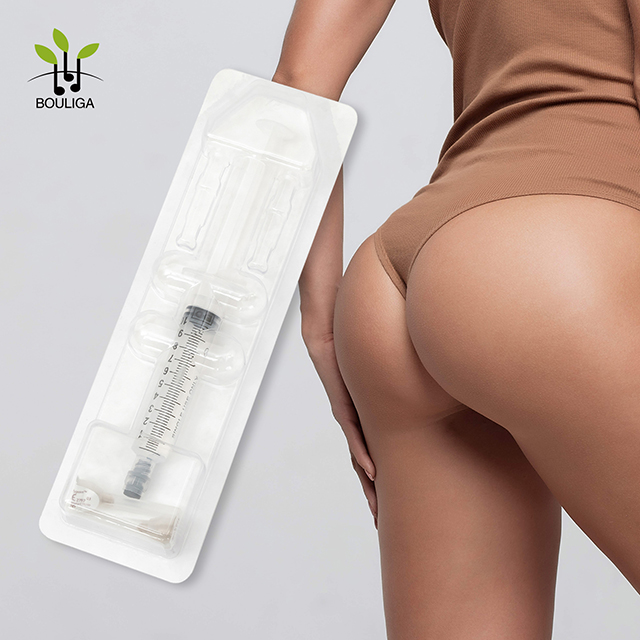
The clinical approach shifts entirely when moving from the face to the body. The anatomical structures below the neck involve thick layers of subcutaneous fat, dense fascial planes, and massive muscle groups. Primary use cases for body injectables include gluteal augmentation, correction of trochanteric depressions (hip dips), calf augmentation, and dorsal hand rejuvenation. These procedures require a fundamental change in both product engineering and injection technique.
While facial treatments primarily focus on restoring lost volume due to aging, body treatments focus heavily on primary structural enhancement and silhouette contouring. Patients frequently seek these treatments to alter their baseline anatomical proportions, creating curves and projection that were never naturally present. This represents a shift from anti-aging restoration to primary morphological augmentation, appealing to a broad demographic seeking specific aesthetic ideals.
Achieving visible contour changes in these large anatomical regions necessitates macro-volume injections. You cannot augment a gluteus maximus or fill a deep hip dip with a single milliliter of product. hyaluronic acid body fillers are deployed in massive quantities to generate sufficient outward projection and lateral width. This macro-volume requirement dictates the manufacturing process, the packaging volume, and the clinical administration protocols.
To survive the extreme mechanical forces of the human body, these formulations require an exceptionally high G-prime and maximum cohesivity. They are engineered specifically to resist compression from sitting, walking, running, and the constant downward pull of gravity. A gel placed in the buttocks must hold its precise shape and maintain its projection under the weight of overlying tissue and the restrictive pressure of tight clothing.
Manufacturers achieve this extreme durability through macromolecular density. They utilize the largest possible particle sizes and employ highly concentrated cross-linking techniques. This robust lifting capacity prevents the product from flattening out or migrating over a wide surface area. The dense matrix ensures that once the gel is deposited into the deep subcutaneous tissue space, it acts as a stable, supportive implant rather than a fluid volumizer. It must integrate with the fibrous septae of the fat layer to anchor itself in place, resisting displacement during vigorous physical activity.
The most obvious distinction between these two categories of injectables is the sheer volume of product required to achieve a clinical endpoint. Facial metrics are measured in single milliliters. Standard facial syringes contain exactly 1 mL of gel. A comprehensive full-face restoration might utilize anywhere from 2 to 6 mL of product distributed across multiple anatomical zones.
Body metrics operate on a completely different scale. body fillers are supplied in bulk packaging, typically in 10 mL, 20 mL, or 50 mL vials. The clinical reality of non-surgical body contouring means a patient will routinely require 50 to 200 mL of gel in a single session to achieve a measurable, visible difference in areas like the hips or buttocks. This massive scalability requirement changes the logistical approach to the procedure, requiring specialized extraction tools, large-bore cannulas, and extended appointment times.
Metabolic factors heavily influence how quickly the human body breaks down and absorbs hyaluronic acid. Regional blood flow, the frequency of muscle contraction, and the innate density of the gel all play a role in the degradation timeline. Because body formulations are densely cross-linked and placed in areas with different vascular networks and metabolic rates, their lifespan differs significantly from facial products.
Expected timelines vary based on the specific product and the patient's baseline metabolism. Facial gels typically offer a lifespan of 6 to 18 months. High-movement areas, such as the lips, metabolize the product much faster due to constant mechanical shearing. Denser body formulations, due to their macromolecular structure and resistance to enzymatic breakdown, often provide a lifespan of 12 to 24 months or more. They are built specifically to endure prolonged mechanical stress without losing their structural integrity.
Both categories offer immediate visible results with minimal downtime compared to invasive surgical procedures. However, the post-procedure recovery protocols differ substantially. Facial recovery usually involves a few days of avoiding strenuous exercise, minimizing heat exposure, and managing minor localized swelling. Body recovery requires strict adherence to physical restrictions. Patients must often wear specialized compression garments for several weeks to support the tissue as the large volume of gel integrates. They must also restrict certain movements, avoid direct pressure on the injected area, and modify their sleeping and sitting positions to prevent the macro-volume boluses from shifting before they are fully anchored in the tissue.
The financial dynamics between face and body treatments differ based on the volume required. Facial maintenance is relatively accessible because it requires only a few milliliters of product per year. Body contouring with injectables involves a high cumulative resource cost. Because macro-volumes are necessary to achieve the desired projection, the total investment for a non-surgical body augmentation is substantial and requires ongoing maintenance to sustain the results.
When evaluating injectable gels versus surgical lifts, practitioners and patients must weigh the benefits of a non-surgical approach against surgical options like autologous fat transfer or silicone implants. Gels restore volume with minimal downtime, avoid the systemic risks of general anesthesia, and leave no surgical scars. However, they are temporary and cannot physically excise or lift severely sagging, redundant skin. Surgical alternatives provide permanent volume and can remove excess tissue, but they require significant downtime, carry higher immediate surgical risks, and involve longer, more painful recovery periods.
Clinical Feature | Facial Formulations | Body Formulations |
|---|---|---|
Primary Clinical Objective | Anti-aging, fold reduction, lip enhancement | Macro-contouring, gluteal/hip augmentation |
Average Treatment Volume | 1 mL – 6 mL total | 50 mL – 200+ mL total |
Rheological Profile (G-Prime) | Low to Medium (Flexible, cohesive) | Very High (Rigid, highly supportive) |
Particle Size & Matrix | Small to Medium particles | Large, macromolecular particles |
Expected Clinical Longevity | 6 – 18 Months | 12 – 24+ Months |
Delivery Method | Fine-gauge needles or small cannulas | Large-bore blunt-tip cannulas |
To properly evaluate a patient for either procedure, clinicians follow a strict assessment protocol:
Assess the patient's baseline tissue thickness and skin laxity to determine if the tissue envelope can support the added volume.
Calculate the exact volume required to achieve the desired projection, ensuring the patient understands the scale of the intervention.
Select the appropriate formulation based on the required G-prime for the specific anatomical zone.
Map the underlying vascular anatomy using ultrasound to identify safe injection planes.
Establish a post-procedure compression and movement restriction plan to ensure proper tissue integration.
Safety and regulatory compliance dictate all clinical decisions in aesthetic medicine. There is a sharp distinction between the regulatory status of facial injectables and body injectables. Many facial products hold specific, on-label approvals from regulatory bodies like the FDA for use in the cheeks, lips, and nasolabial folds. Extensive clinical trials back these approvals, demonstrating safety and efficacy for those specific anatomical zones.
Conversely, body contouring with hyaluronic acid remains an off-label application in the United States and several other jurisdictions. While the base material is identical, the macro-volume application lacks the same specific regulatory clearance. This regulatory landscape makes verifying product authenticity an absolute necessity. The high consumer demand for non-surgical body contouring has led to a dangerous influx of unregulated, counterfeit gels sold through illicit channels. Injecting unverified substances into the body leads to catastrophic infections, severe tissue necrosis, and permanent disfigurement. Practitioners must source their inventory exclusively from reputable, established medical manufacturers and maintain strict chain-of-custody records.
The sheer volume of product used in body treatments amplifies specific clinical risks. Product migration is a primary concern. If high-volume gels are deposited into the incorrect tissue plane—either too superficial in the dermis or too deep within the muscle—gravity and physical pressure will cause the product to shift. This results in asymmetrical lumps, palpable nodules, or sagging in unintended areas, completely ruining the aesthetic contour.
Vascular occlusion remains the most severe risk in any injectable procedure. An occlusion occurs when gel is inadvertently injected directly into an artery, blocking blood flow to the surrounding tissue. In the face, injecting near the facial artery or angular artery can cause localized skin necrosis or irreversible blindness. In the body, injecting near deep gluteal vessels carries the risk of massive systemic complications, including pulmonary embolism. To mitigate these severe risks, the use of large-bore blunt-tip cannulas and real-time ultrasound-guided injections is the standard of care for macro-volume procedures. Ultrasound allows the practitioner to visualize the arteries and ensure the cannula remains in the safe subcutaneous plane.
Reversibility presents a unique logistical challenge in macro-volume treatments. One of the primary safety advantages of hyaluronic acid is that it can be dissolved using an enzyme called hyaluronidase. Dissolving a small 1 mL nodule in the lip is a straightforward, rapid process. However, dissolving 100 mL of dense, highly cross-linked gel in the buttocks due to an adverse reaction or severe migration is incredibly difficult. It requires massive, repeated doses of hyaluronidase over multiple sessions. This process carries its own set of risks, including severe inflammatory reactions and the potential degradation of the patient's native tissue.
Body fillers and facial fillers are distinct medical devices engineered with specific rheological properties to match the mechanical demands of their target tissues. Using a facial product for a body augmentation results in rapid degradation and poor lift, while using a body product in the face causes severe lumping and unnatural stiffness. Patients and practitioners must evaluate the treatment based on the required lift capacity, the total volume needed, and the specific anatomical plane of injection to ensure safe and effective outcomes.
To move forward safely and effectively, take the following actionable steps:
Schedule a consultation with a board-certified dermatologist or plastic surgeon who specializes specifically in macro-volume injectables and ultrasound anatomy.
Request to see the clinic's complication management protocols, specifically verifying their on-site hyaluronidase stocking for macro-volume emergencies.
Calculate the exact volume required to achieve your aesthetic goals to ensure you understand the full scope of the intervention.
Review verified, long-term before-and-after photos of patients with similar baseline anatomy to set realistic expectations.
A: Technically yes, but it is highly ineffective. Facial formulations lack the high G-prime and macromolecular density required to lift heavy body tissue. They will flatten under pressure, migrate easily, and metabolize too quickly to provide meaningful contouring.
A: High-density, heavily cross-linked body injectables generally last between 12 and 24 months. Longevity depends on the patient's baseline metabolism, the specific formulation used, and the mechanical stress placed on the injected area.
A: Discomfort is usually minimal. Most formulations contain lidocaine to numb the tissue internally upon injection. Practitioners also use topical numbing creams and blunt-tip cannulas, which significantly reduce pain and tissue trauma compared to sharp needles.
A: If a hyaluronic acid gel migrates due to improper placement or excessive physical pressure, it can be dissolved using an enzyme called hyaluronidase. However, dissolving large volumes requires multiple sessions and high doses of the enzyme.
A: Yes, as long as they are made of hyaluronic acid. However, the logistical challenge is much greater. Dissolving 50 to 100 mL of dense gel is a complex, multi-step process compared to dissolving a single milliliter in the face.
A: Gels offer immediate results with no surgical downtime, but they are temporary and require ongoing maintenance. Fat transfer uses your own tissue for permanent volume but involves liposuction, general anesthesia, and a lengthy, restrictive recovery period.
