

Views: 0 Author: Site Editor Publish Time: 2026-09-30 Origin: Site


Sourcing aesthetic injectables requires balancing clinic demand, cash flow, and stringent medical compliance. Over-ordering risks product expiration, while under-ordering leads to stockouts and lost revenue. For clinics, medical spas, and distributors scaling their treatment offerings, navigating the procurement of a mesotherapy face filler goes beyond simply looking at unit price. Structuring a profitable purchasing strategy requires a realistic understanding of Minimum Order Quantities (MOQ), global shipping lead times, and rigorous supplier validation frameworks.
Procuring medical aesthetics means managing delicate active ingredients across complex international supply chains. You must protect patient safety while optimizing your working capital. Readers will learn how to balance shelf-life constraints against volume discounts. We will also explore actionable frameworks for calculating safety stock, avoiding common shipping delays, and selecting highly compliant global manufacturing partners.
Scaling an aesthetic practice often forces buyers into a difficult corner. You want lower unit costs, but you also need to keep cash readily available. Navigating Minimum Order Quantities (MOQ) dictates how much capital you lock into inventory. High-volume orders significantly reduce the cost-per-unit. This sounds ideal on paper. However, tying up thousands of dollars in excess stock introduces immediate cash flow restrictions. It also escalates the risk of expiration before you can use the product.
Mesotherapy solutions contain highly sensitive active ingredients. They blend hyaluronic acid, delicate vitamin complexes, and volatile peptides. Over time, these ingredients naturally degrade. Aesthetic injectables generally carry a rigid 12- to 24-month shelf life from the manufacturing date. Ordering more than a 6-month supply becomes a high-risk strategy for single-location clinics. If patient demand fluctuates, you might face thousands of dollars in expired, unusable stock. Wasted inventory rapidly cancels out any volume discounts you negotiated.
Conversely, ordering too little exposes you to supply chain disruptions. Stockouts carry hidden costs beyond missed daily sales. When backordered products delay scheduled treatments, patient retention drops. Aesthetic clients value consistency. If they arrive for a scheduled treatment and find your inventory depleted, they will likely seek another provider. Managing this balance requires exact data tracking and realistic utilization forecasts.
Understanding the supplier landscape helps you anticipate order requirements. Manufacturers structure their MOQs based on how much labor and raw material a production run requires. You essentially choose between two procurement paths: wholesale distribution or OEM/ODM manufacturing.
Ready-to-ship branded products offer the lowest barrier to entry. Distributors keep these items in stock, meaning you skip the production wait time. MOQs for these off-the-shelf items typically sit between 50 and 100 boxes. This approach works best for clinics testing patient demand before committing to bulk purchases.
Private label and custom formulations demand much higher commitments. Custom production runs require unique compounding, intensive sterilization, and bespoke packaging. Consequently, manufacturers usually enforce MOQs of 1,000 to 5,000+ units. They cannot halt massive factory lines for minor orders.
Your chosen product features directly influence these minimums. Complex mesotherapy face filler specifications alter manufacturing constraints. For example, processing cross-linked hyaluronic acid takes longer and requires different reactor conditions than non-cross-linked variants. Adding specialized vitamin complexes requires careful homogenization. Furthermore, packaging formats matter. Pre-filled sterile syringes cost more to assemble and require higher MOQs than standard multi-use vials.
Smart buyers use tiered pricing structures to their advantage. You should negotiate pilot orders to test clinical efficacy before signing bulk annual contracts. Ask the manufacturer to accept a smaller testing MOQ at a slightly higher unit price. Once you validate the quality and patient response, you can confidently scale up to their standard bulk MOQ.
Wholesale vs. OEM/ODM Sourcing Chart
| Sourcing Type | Typical MOQ | Best Use Case | Cost Structure |
|---|---|---|---|
| Wholesale Branded | 50 - 200 units | Validating patient demand locally | Higher per-unit cost, lower capital risk |
| Private Label (White Label) | 1,000+ units | Building clinic brand identity | Moderate setup fees, better margins |
| Custom Formulation (OEM) | 3,000 - 5,000+ units | Creating proprietary treatment protocols | High initial capital, lowest long-term unit cost |
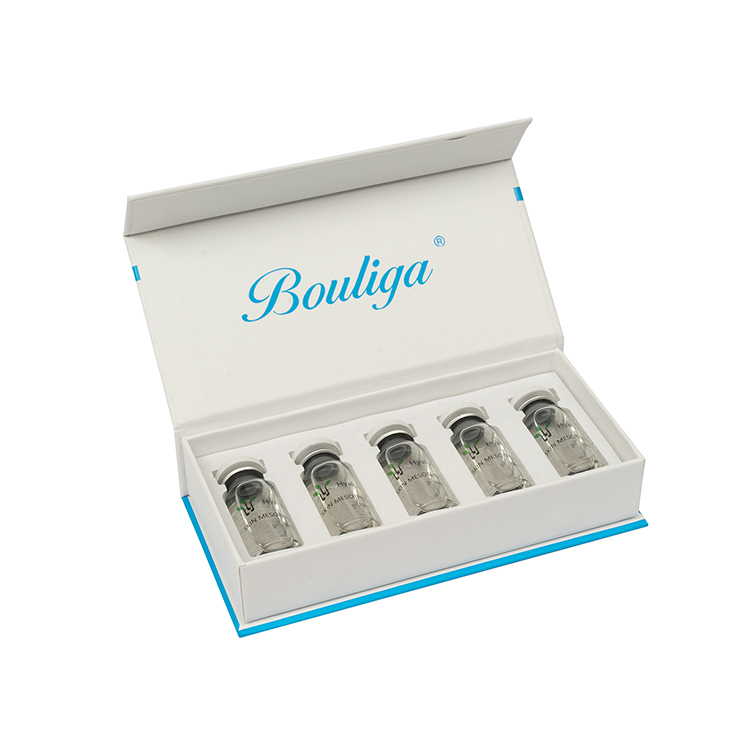
Lead times represent the total gap between issuing a Purchase Order and receiving usable inventory. Accurate forecasting prevents dangerous stockouts. Aesthetic product manufacturing involves rigid, highly regulated phases. You cannot rush these steps without compromising patient safety.
Understanding these distinct phases helps you build a realistic buffer. If your supplier quotes a four-week lead time, they often only mean the production phase. Always add extra weeks for customs clearance and regional delivery routing.
Partnering with the right manufacturer dictates your long-term success. The aesthetic market contains varying degrees of quality control. You must heavily scrutinize potential partners before sending any funds. Regulatory compliance remains your first filter.
Do not accept verbal assurances regarding factory standards. You must require hard documentation. Request their ISO 13485 certification, which governs medical device manufacturing. Alternatively, look for ISO 22716 for cosmetic GMP standards. Verify their CE marks and ask if they hold localized registrations in your target market. Genuine manufacturers proudly share these documents.
Transparency in material sourcing is equally critical. A trustworthy mesotherapy face filler supplier will readily provide a Certificate of Analysis (CoA). This document proves the pharmaceutical or cosmetic grade purity of their active ingredients. It shows the exact molecular weight of the hyaluronic acid and confirms the absence of heavy metals. If a supplier hesitates to share a CoA, walk away immediately.
Assess their communication habits and contingency planning early. Ask them how they handle delayed shipments or damaged goods. Inquire about their protocol if temperature controls fail during transit. Their answers will reveal their operational maturity. You want a partner who takes immediate accountability for logistics failures.
Watch out for common industry red flags. Be highly suspicious of unrealistically low MOQs for custom products. Quality custom compounding simply cannot happen profitably at 50 units. Avoid suppliers who lack verifiable batch tracking systems. Finally, never trust a manufacturer who refuses to provide small sample orders for clinical review.
Data-driven inventory planning separates profitable clinics from struggling ones. You must transition from guessing to calculating precise needs. When expanding your clinic's offerings to include a specialized mesotherapy face filler, you must track daily utilization closely.
Start by calculating your burn rate. This metric assesses your weekly or monthly utilization. Look at historical clinic data over the last 90 days. If you are launching a new treatment, use projected patient acquisition numbers based on booked consultations. For instance, if you treat 10 patients a week, and each uses two vials, your burn rate is 20 vials weekly.
Next, determine your Reorder Points. This creates a hard data point for issuing a new Purchase Order. It incorporates your safety stock. You should set your reorder point based on supplier lead time plus a two-week safety buffer. If shipping takes four weeks, you must reorder when exactly six weeks of inventory remains on your shelf. This buffer protects you against sudden customs delays.
Consider negotiating staggered delivery agreements for large orders. Distributors can secure bulk pricing by signing a high MOQ contract. However, instead of taking all 5,000 units at once, they arrange for monthly drops. The manufacturer holds the stock in their climate-controlled warehouse and ships smaller batches monthly. This brilliant strategy preserves the product's shelf life and keeps your clinic's cash flow fluid.
Sample 90-Day Inventory Planning Model
| Planning Metric | Calculation / Formula | Example Scenario |
|---|---|---|
| Weekly Burn Rate | Total units used ÷ Number of weeks | 120 units ÷ 4 weeks = 30 units/week |
| Lead Time Demand | Burn rate × Supplier lead time (weeks) | 30 units × 5 weeks lead time = 150 units |
| Safety Stock | Burn rate × Buffer weeks (e.g., 2 weeks) | 30 units × 2 weeks = 60 units |
| Reorder Point | Lead Time Demand + Safety Stock | 150 + 60 = 210 units |
Effective procurement of mesotherapy products relies on a calculated balance. You must secure competitive pricing through optimal MOQs while mitigating risk through accurate lead-time forecasting. Relying on guesswork leads to expired stock or angry patients facing delayed treatments. By mapping out production times, verifying supplier compliance, and calculating precise reorder points, you safeguard your operational efficiency.
Your actionable next steps are clear. Audit your current 90-day usage rate to establish a baseline burn rate. Request a product sample and a Certificate of Analysis from your shortlisted supplier today. Finally, negotiate a small trial order. This allows you to test their communication and stated lead times before committing to a full-scale annual contract.
A: Most reputable manufacturers require an MOQ of 1,000 to 5,000 units for custom formulations or private labeling to cover the costs of setup, sterilization, and custom packaging.
A: Air freight typically takes 5–10 days, but customs clearance for medical or cosmetic injectables can add 1–3 weeks depending on the destination country's regulatory requirements.
A: Yes. Specialized cold-chain logistics require specific scheduling and handling, which can slightly extend transit times but is non-negotiable for preserving the efficacy of hyaluronic acid and peptide complexes.
A: Yes. Reliable suppliers will always allow you to purchase a small sample batch (often 5-10 units) to verify product specifications, viscosity, and packaging quality before enforcing bulk MOQs.
