

Views: 0 Author: Site Editor Publish Time: 2026-10-05 Origin: Site


Hyaluronic acid remains a non-negotiable active ingredient in modern cosmetic chemistry. While consumer awareness heavily focuses on its hydrating properties, formulation teams face significant technical challenges regarding raw material sourcing and processing. Purchasing pre-hydrated solutions often introduces logistical inefficiencies. Formulators end up shipping unnecessary water weight, accepting limited control over preservative systems, and working within restricted molecular weight ratios. Conversely, processing raw powder presents distinct technical hurdles, from severe clumping and extended hydration times to complex viscosity management.
This technical evaluation guide provides cosmetic chemists, R&D teams, and brand owners with actionable methodologies to integrate raw powder effectively. By optimizing hydration protocols and selecting precise molecular weights, formulators can maximize emulsion stability and deliver targeted clinical outcomes. Integrating hyaluronic acid powder directly into the manufacturing process grants unparalleled control over the final product chassis.
Molecular Weight Dictates Function: Selecting between high, medium, and low molecular weight powders fundamentally alters both the rheology of the formula and the depth of skin hydration, directly impacting barrier support and repair claims.
Powder Yields Superior ROI: Sourcing raw powder rather than pre-mixed solutions significantly reduces shipping costs, extends raw material shelf-life, and provides absolute control over the formulation’s preservative system.
Sodium Hyaluronate is the Standard: Most commercial "hyaluronic acid" is actually formulated using sodium hyaluronate powder due to its superior oxidative stability, water solubility, and resistance to degradation.
Processing Requires Precision: Successful implementation demands specific hydration protocols (e.g., vortex mixing, pre-dispersing in glycols) to mitigate the high risk of agglomeration (clumping).
Defining what makes a successful hydrating active in commercial skincare requires looking beyond basic moisturization. A high-performing raw material must deliver exceptional stability across various temperature ranges, ensure batch-to-batch consistency, and support verifiable clinical claims. Pre-dispersed liquid hyaluronic acid often falls short of these criteria. Liquid solutions introduce unnecessary variables into the manufacturing process, forcing formulators to adapt their base chassis around the supplier's pre-existing water and preservative matrix. By transitioning to a dry powder format, R&D teams regain absolute control over the formulation architecture. You ensure the active ingredient performs precisely as intended without compromising the integrity of the emulsion.
Comparing the logistics of raw powder against standard 1% or 2% pre-hydrated solutions reveals stark operational differences. Liquid solutions consist of up to 99% water. Shipping and storing these heavy drums dramatically increases freight costs and requires substantial warehouse space. Furthermore, pre-hydrated solutions require robust preservative systems to prevent microbial growth during transit and storage. When formulators add these liquids to a new product, they inadvertently introduce redundant preservatives into their formula. This can lead to preservative stacking, increasing the risk of skin irritation and destabilizing sensitive active ingredients.
Raw powder eliminates these logistical burdens. It requires a fraction of the storage footprint, slashes shipping weight, and allows chemists to design a custom, minimalist preservative system tailored specifically to the final product.
Operational Parameter | Dry Powder Format | 1% Pre-Hydrated Solution |
|---|---|---|
Storage Footprint | Minimal (small bags or tubs) | Massive (requires large drums or totes) |
Shipping Weight | Low (paying only for the active) | High (paying to ship 99% water) |
Preservative Control | Absolute (formulator adds their own) | Restricted (must accept supplier's system) |
Formulation Flexibility | High (can adjust concentration freely) | Low (locked into the 1% ratio) |
Stability remains a primary concern when handling hygroscopic polymers. Storing hyaluronic acid in its dry, powdered state offers significant advantages over liquid formats. In an aqueous solution, the polymer chains are continuously exposed to water, increasing the susceptibility to premature hydrolysis. Over time, this hydrolytic degradation breaks down the molecular weight, reducing the ingredient's viscosity-building properties and altering its clinical efficacy.
Liquid solutions are also highly vulnerable to microbial contamination if the preservative system fails. Dry powder, when stored in airtight, moisture-controlled environments, remains chemically inert. It resists oxidation and bacterial proliferation, effectively extending the raw material shelf-life and ensuring that the polymer chains remain intact until the exact moment of batching.
Consumer skincare needs fluctuate with seasonal environmental changes. Stocking raw powder provides R&D departments with the agility to adjust concentrations and molecular weight ratios rapidly. Formulators can create lighter, fast-absorbing summer serums by utilizing lower concentrations of specific molecular weights, or they can engineer heavy, occlusive winter creams by increasing the polymer load. Relying on pre-mixed liquid solutions restricts this flexibility, as altering the concentration often requires sourcing entirely new raw materials or drastically changing the water phase of the formula. Raw powder serves as a versatile, universal building block, enabling brands to iterate on seasonal product variants efficiently without overhauling their entire supply chain.
High molecular weight variants typically exceed 1,000 kilodaltons (kDa) and function primarily on the outermost layers of the stratum corneum. Due to their large molecular size, these polymers cannot penetrate the skin deeply. Instead, they excel at film-forming and preventing transepidermal water loss (TEWL). Upon application, HMW-HA creates a breathable, viscoelastic matrix on the skin surface. This composition film provides immediate surface plumping, smoothing rough texture, and supporting a healthy skin barrier by locking moisture in while keeping environmental irritants out.
From a formulation perspective, HMW-HA significantly impacts product rheology. It acts as a secondary thickener, dramatically increasing the viscosity of the water phase. While this creates a luxurious, cushiony texture, it requires careful calibration. Using HMW-HA at excessive concentrations often leads to a phenomenon known as pilling, where the product rolls off the skin in small flakes when layered with other cosmetics or sunscreens. Formulators must balance the concentration to achieve the desired surface hydration without compromising the elegant finish of the final composition.
To achieve deeper epidermal hydration, cosmetic chemists rely on fractured polymer chains. Integrating low molecular weight hyaluronic acid powder, typically measuring under 100 kDa, easily penetrates the stratum corneum. Once absorbed, it replenishes moisture reservoirs within the deeper layers of the epidermis. This targeted hydration visibly fills fine lines from the inside out and influences cellular signaling pathways. These pathways support long-term anti-aging claims, accelerate skin repair, and promote optimal wound healing environments.
Unlike its high molecular weight counterpart, LMW-HA exerts minimal impact on the viscosity of the formulation. The shorter polymer chains do not entangle extensively in water, resulting in a fluid, water-like consistency. This unique characteristic allows formulators to incorporate much higher concentrations of the active ingredient without creating a tacky, stringy, or unworkable texture. It is the ideal choice for lightweight, high-potency serums designed for rapid absorption.
Modern clinical formulations rarely rely on a single molecular weight. Evaluating the clinical and marketing value of multi-weight blending reveals a highly synergistic approach to skin hydration. By formulating with a spectrum of molecular weights, chemists can achieve both immediate tactile feedback and sustained structural hydration.
To execute a successful multi-weight blend, formulators typically follow a specific staging process:
Determine the target viscosity of the final emulsion to establish the maximum allowable HMW-HA concentration.
Calculate the required LMW-HA dosage needed to substantiate deep hydration and cellular repair claims.
Pre-disperse both powders together in a shared glycol phase to ensure uniform wetting.
Introduce the combined slurry into the vortex of the water phase to hydrate the polymers simultaneously.
Measure the final viscosity after a 24-hour resting period to account for complete polymer swelling.
This tiered hydration strategy makes the final product highly versatile. It effectively addresses acute dehydration while providing long-term barrier maintenance. Multi-weight blends allow marketing teams to substantiate broader clinical claims, positioning the product as a comprehensive hydration solution rather than a superficial moisturizer.
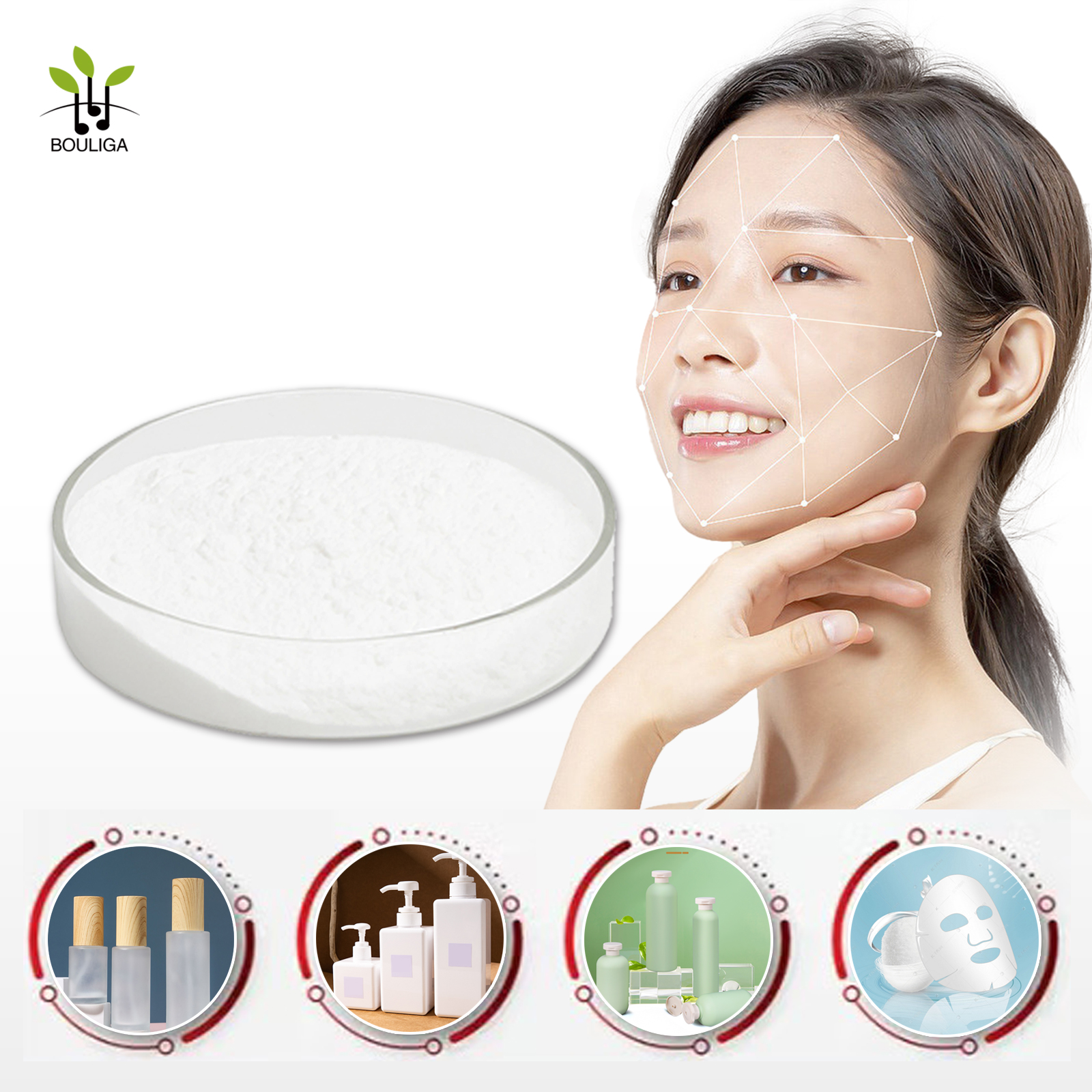
The origin of raw materials heavily influences product compliance and consumer acceptance. Historically, hyaluronic acid was extracted from animal sources, most notably rooster combs. This traditional extraction method presented significant challenges regarding purity, batch consistency, and ethical concerns. Today, modern cosmetic chemistry relies almost exclusively on advanced bacterial fermentation techniques, utilizing strains such as Streptococcus zooepidemicus. This bio-fermentation process yields a highly purified, uniform polymer chain.
Emphasizing the necessity of bacterial fermentation is mandatory for modern cosmetic compliance. Fermentation-derived HA is inherently vegan and cruelty-free, aligning with strict global regulatory standards and consumer demands for ethical sourcing. The fermentation process allows manufacturers to tightly control the molecular weight distribution, resulting in a far more reliable and predictable raw material.
While marketing materials frequently use the term "hyaluronic acid," the vast majority of commercial formulations actually utilize its salt derivative. Clarifying the chemical distinction between pure hyaluronic acid and its salt form is necessary for formulation accuracy. Pure hyaluronic acid is highly acidic and notoriously difficult to stabilize in standard cosmetic emulsions. To resolve this, manufacturers neutralize the acid to create sodium hyaluronate.
Integrating sodium hyaluronate powder for skincare has become the industry standard for several technical reasons. The salt form possesses a smaller molecular size in its dry state, which facilitates easier dissolution in the water phase. It exhibits vastly enhanced oxidative stability, resisting degradation during high-shear mixing and temperature fluctuations. Additionally, sodium hyaluronate is significantly less susceptible to oxidation over the product's shelf-life, ensuring the formulation maintains its structural integrity and clinical efficacy.
Qualifying a new supplier requires a rigorous review of the Certificate of Analysis (COA). R&D teams must evaluate several critical metrics before approving cosmetic grade hyaluronic acid powder for production. First, the molecular weight distribution must align precisely with the intended formulation goals. A broad distribution can lead to unpredictable viscosity and penetration rates. Second, the assay percentage should consistently exceed 95%, confirming the purity and concentration of the active compound.
COA Parameter | Acceptable Industry Standard | Impact on Formulation |
|---|---|---|
Assay (Purity) | > 95.0% | Ensures active concentration and efficacy. |
pH (0.1% Solution) | 6.0 - 7.5 | Prevents sudden pH shifts in the water phase. |
Loss on Drying | < 10.0% | Confirms the powder is not holding excess ambient moisture. |
Heavy Metals (Pb, As) | < 10 ppm | Mandatory for global toxicological compliance. |
Total Plate Count | < 100 CFU/g | Prevents microbial contamination of the batch. |
Heavy metal limits represent another safety metric. The COA must demonstrate stringent controls over lead, arsenic, mercury, and cadmium to comply with international safety regulations. Microbiological purity is non-negotiable. The aerobic plate count must remain strictly below industry thresholds, with confirmed absences of pathogens like Staphylococcus aureus and Pseudomonas aeruginosa. Failing to verify these metrics can result in catastrophic batch failures and severe regulatory penalties.
The most common implementation risk when working with hygroscopic powders is severe agglomeration. Adding the powder directly to the aqueous phase without proper technique results in the immediate formation of encapsulated dry clumps, colloquially known as "fish-eyes." The outer layer of the powder hydrates instantly, creating a tough, impermeable gel barrier that prevents water from reaching the dry powder trapped inside. Once these clumps form, they are nearly impossible to break down, even with prolonged high-shear mixing, leading to rejected batches and wasted materials.
To mitigate this risk, formulators must implement strict standard operating procedures (SOPs) for hydration. The most effective strategy involves pre-dispersing the powder in a wetting agent before introducing it to water.
Weigh the exact amount of powder required for the batch.
Select a compatible glycol, such as glycerin, propanediol, or butylene glycol.
Mix the powder and glycol at a 1:3 or 1:4 ratio to create a smooth, uniform slurry.
Activate the overhead stirrer or homogenizer in the main water phase to create a strong vortex.
Slowly pour the slurry directly into the vortex to ensure immediate and even dispersion.
Allow the mixture to hydrate under moderate agitation until the solution turns completely clear.
Hyaluronic acid does not exist in a vacuum; it interacts constantly with other ingredients in the chassis. Understanding how it interacts with other rheology modifiers is necessary for stabilizing the final composition film on the skin. When combined with anionic polymers like carbomers or natural gums like xanthan gum, HA can create a synergistic thickening effect, exponentially increasing the viscosity of the water phase. Formulators must carefully titrate these combinations to prevent the emulsion from becoming overly rigid or gelatinous.
Addressing the "tackiness" threshold is another rheological challenge. High concentrations of HA, particularly high molecular weight variants, can leave a sticky, uncomfortable residue on the skin as the water evaporates. To formulate elegant, non-sticky finishes, chemists often incorporate specific emollient esters or volatile silicones. These ingredients provide a smooth, dry slip that counteracts the inherent tackiness of the polymer film, resulting in a cosmetically elegant application.
Maintaining the structural integrity of the polymer chain requires strict adherence to specific pH ranges. The optimal pH range for stability typically falls between pH 4.0 and 8.0. Formulating outside this window, particularly in highly acidic environments below pH 3.5, accelerates the hydrolytic degradation of the polymer. This breakdown rapidly destroys the viscosity of the product and negates the film-forming benefits of the active ingredient.
Electrolyte tolerance presents another significant formulation hurdle. Hyaluronic acid is highly sensitive to ionic environments. Formulating with high levels of electrolytes, such as sodium PCA, magnesium sulfate, or certain mineral-rich botanical extracts, can cause a sudden and drastic loss of viscosity. The ions disrupt the polymer's ability to hold water, causing the gel network to collapse. Extreme pH active ingredients like L-ascorbic acid or high concentrations of Alpha Hydroxy Acids (AHAs) introduce massive ionic loads that destabilize the HA matrix. Formulators must utilize specialized, electrolyte-tolerant thickeners or encapsulate the conflicting actives to maintain emulsion stability.
Determining the optimal inclusion rate is a delicate balance between clinical efficacy and formulation aesthetics. Standard inclusion rates for dry powder typically range from 0.1% to 2.0% in the final formula. Within this range, the active provides robust hydration, excellent barrier support, and a cosmetically elegant feel. Analyzing the dose-response curve reveals significant diminishing returns when formulating above the 2% threshold.
Pushing the concentration higher does not yield proportional hydration or barrier-repair benefits. Instead, the excess polymer severely degrades the texture of the product. The formulation becomes excessively stringy, difficult to spread, and highly prone to peeling or pilling once dry. The composition film becomes too thick, trapping heat and potentially causing occlusive breakouts. Sticking to validated usage rates ensures maximum efficacy while maintaining the sensory profile consumers demand.
Scaling a skincare brand requires a rigorous cost-to-benefit analysis of raw materials. Weighing the upfront cost of premium, tightly controlled molecular weight fractions against cheaper, broader-spectrum alternatives is a business decision. Premium powders carry a higher initial price tag per kilogram. However, this cost is rapidly offset by the marketing power of verifiable clinical claims. Utilizing precise molecular weights allows brands to substantiate claims regarding wrinkle reduction, deep cellular hydration, and wound healing support.
Investing in high-purity raw materials drastically reduces formulation failure rates. Cheaper powders often contain impurities or inconsistent molecular weight distributions that lead to unstable emulsions, shifting viscosities, and ultimately, recalled batches. The predictability and stability of premium powder streamline the R&D process, reduce manufacturing downtime, and protect the brand's reputation, making it a highly scalable and cost-effective choice in the long run.
Transitioning to raw hyaluronic acid powder represents a major operational upgrade for scaling skincare brands. Moving away from pre-hydrated solutions grants formulation teams absolute control over the product chassis, eliminating redundant preservatives and unnecessary shipping costs. By mastering hydration protocols and leveraging precise molecular weights, chemists can engineer highly stable, cosmetically elegant emulsions that deliver targeted, verifiable clinical results.
To implement these formulation strategies effectively, follow these immediate next steps:
Audit your current raw material portfolio to identify any pre-hydrated HA solutions that can be replaced with dry powder to reduce shipping weight and preservative load.
Request detailed Certificates of Analysis (COAs) and physical samples from reputable suppliers to verify molecular weight distributions and purity metrics.
Conduct pilot hydration tests using your specific base chassis to establish precise standard operating procedures for high-shear mixing and slurry preparation.
Perform accelerated stability testing to monitor viscosity changes, pH drift, and potential electrolyte incompatibilities over a 12-week period.
Calibrate your usage rates between 0.1% and 2.0% to balance clinical efficacy with an elegant, non-pilling sensory finish.
A: Pure hyaluronic acid is highly acidic and difficult to stabilize in cosmetic formulations. Sodium hyaluronate is the neutralized salt form of the acid. The salt form is the industry standard because it has a smaller molecular size, dissolves much easier in water, and offers superior resistance to oxidation and degradation over the product's shelf-life.
A: To prevent agglomeration, never add the powder directly to water. First, pre-disperse the powder in a wetting agent like glycerin or propanediol to create a uniform slurry. Slowly introduce this slurry into the water phase while using continuous high-shear mixing, such as a homogenizer, to ensure rapid and even hydration.
A: The optimal usage rate typically falls between 0.1% and 2.0%. Low molecular weight variants do not significantly increase viscosity, allowing for slightly higher concentrations without creating a sticky texture. Exceeding 2% offers diminishing returns and can lead to product pilling upon application.
A: High molecular weight fractions form a breathable film on the skin surface, preventing transepidermal water loss and keeping irritants out. Low molecular weight fractions penetrate deeply to replenish moisture reservoirs and influence cellular signaling pathways, creating an optimal hydrated environment that accelerates natural skin repair.
A: Yes, but it is highly stable when stored correctly. In its dry powder form, kept in an airtight, moisture-controlled environment away from direct light and heat, it resists degradation and microbial growth. Once hydrated in water, it becomes susceptible to hydrolytic breakdown and requires a robust preservative system.
A: High molecular weight HA acts as a secondary thickener, significantly increasing the viscosity of the water phase and creating a stable, cushiony surface film. Low molecular weight HA has minimal impact on viscosity, resulting in a fluid, water-like texture that penetrates the skin quickly without leaving a heavy film.
