

Views: 0 Author: Site Editor Publish Time: 2026-10-21 Origin: Site


Are skin boosters and mesotherapy really different? Both aim to improve skin quality, but their formulations and treatment goals can vary.
Understanding mesotherapy face fillers helps clinics compare ingredients, benefits, safety, and suitable applications. This guide explains the key differences and how to choose the right option.
Skin boosters are injectable aesthetic products designed to improve selected skin-quality characteristics. Many formulations use hyaluronic acid to support hydration and improve the appearance of skin smoothness. Depending on the product, other ingredients may also be included. The intended outcome usually differs from traditional volumizing fillers, which are designed to add volume or alter facial contours.
However, skin boosters are not one standardized product category. Their composition, injection depth, treatment protocols, and approved indications vary. Some products use non-cross-linked hyaluronic acid, while others use modified or cross-linked formulations. These differences influence product behavior and intended application. Therefore, buyers should examine product-specific documentation rather than assume every skin booster works identically.
Clinical evidence also varies between formulations. Research supporting one injectable product does not automatically establish the benefits of another product containing similar ingredients. Practitioners should review relevant studies, instructions for use, and local regulatory requirements before selecting a treatment. This approach supports realistic expectations and helps prevent unsupported claims about collagen production, skin repair, or long-lasting rejuvenation.
Mesotherapy describes a technique involving multiple small injections of selected substances into targeted skin layers. Depending on the formulation, these substances may include hyaluronic acid, vitamins, peptides, or other ingredients. Treatment goals may include improving hydration, skin texture, or the appearance of uneven skin tone. However, the term does not identify one universal formula or guarantee a particular clinical outcome.
This broader scope creates an important distinction. Skin boosters are generally positioned around skin quality, while mesotherapy can refer to a wider range of ingredient combinations and treatment objectives. Nevertheless, the categories overlap. A hyaluronic acid-based mesotherapy product may aim to improve hydration, just like a product marketed as a skin booster.
Professional buyers should therefore compare the actual formulation rather than rely on product labels. Check ingredient concentrations, intended treatment areas, injection instructions, and available clinical evidence. These details help determine whether two products serve similar purposes or have meaningfully different applications. They also provide a more reliable basis for product selection than general descriptions such as rejuvenating, moisturizing, or anti-aging.
Note: Skin booster and mesotherapy are overlapping terms. Always assess the individual product, its intended use, and its supporting evidence.
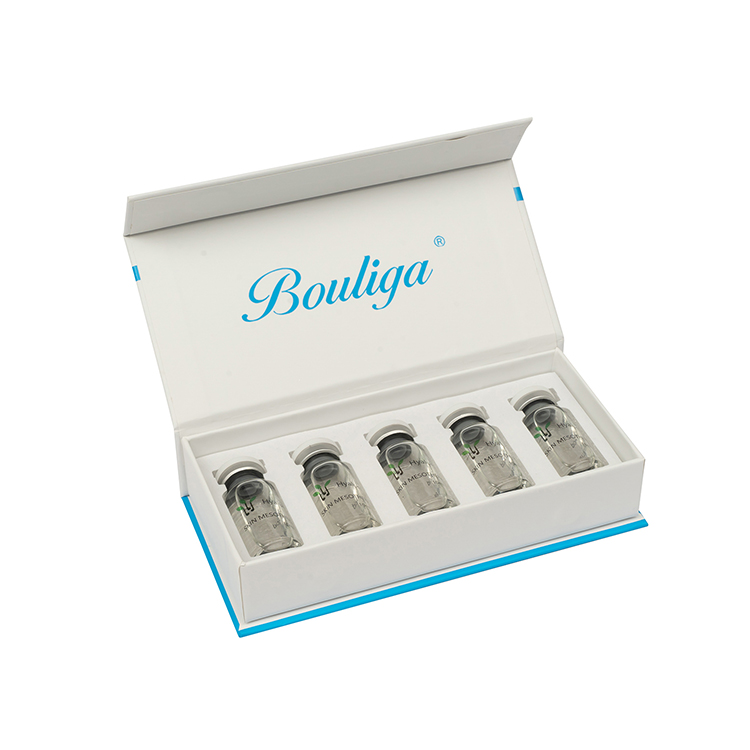
Hyaluronic acid is an important ingredient in many injectable skin-quality treatments. It can bind water and contribute to a hydrated appearance. In skin boosters, it is often used to improve skin smoothness and moisture. In mesotherapy, it may appear alone or alongside other ingredients intended to address specific skin concerns. This overlap explains why some products can fit both descriptions.
The formulation matters as much as the ingredient name. Molecular characteristics, concentration, cross-linking, and other formulation properties can affect how a product behaves after injection. A non-cross-linked hyaluronic acid formulation should not automatically be considered equivalent to a cross-linked dermal filler. Their physical properties and intended applications may differ considerably.
When reviewing products, practitioners should examine the manufacturer's technical documentation. Confirm the ingredient profile, product classification, treatment area, and recommended administration method. Avoid assuming that a higher concentration necessarily produces better results. Suitability depends on the complete formulation and its intended purpose. Buyers should also verify the product's legal status in their target market before making procurement decisions.
Some injectable products contain ingredients beyond hyaluronic acid. These may include PDRN, niacinamide, vitamins, peptides, or other compounds. Their intended roles differ, and their inclusion does not establish that a finished product is effective. Each ingredient requires evaluation within the specific formulation and delivery method.
For example, a supplier listing for a mesotherapy skin booster describes a formulation containing PDRN, non-cross-linked hyaluronic acid, niacinamide, taurine, and carnosine. The listing markets it for skin quality, elasticity, and hydration. These details illustrate how combination formulations may differ from products focused primarily on hyaluronic acid. They do not, however, establish equivalent ingredients or performance for every mesotherapy product.
PDRN and peptide-based formulations also require careful interpretation. Laboratory findings or studies involving a particular compound cannot independently prove that every injectable product containing it will deliver the same result. Product concentration, purity, stability, delivery method, and clinical testing remain relevant.
For professional buyers, a detailed ingredient declaration is essential. Ask suppliers for specifications, safety documentation, storage conditions, and product-specific evidence. These records help clinics assess suitability and support responsible communication with patients.
Tip: Compare complete formulations and clinical documentation instead of ranking products by the number of active ingredients.
Skin boosters are often considered when the primary goal is improving the appearance of dehydrated, rough, or less supple skin. Depending on the formulation, treatment may support hydration and help skin appear smoother. Some products are also marketed for elasticity or superficial lines. These outcomes should be evaluated individually rather than assumed for the entire category.
A skin booster is not necessarily the best option for every concern. Deep wrinkles, substantial facial volume loss, severe skin laxity, and established acne scars may require different approaches. Some concerns may respond better to topical skincare or other professionally selected procedures. The appropriate treatment depends on the diagnosis, product characteristics, and the person's medical history.
Practitioners should define the intended outcome before selecting a product. For example, a patient seeking improved hydration has a different treatment goal from someone seeking structural facial volume. Clear goals make it easier to evaluate the expected benefit and determine whether the treatment is appropriate.
Professional clinics should also explain the limits of available evidence. Improvements in skin appearance do not necessarily demonstrate increased collagen production or permanent tissue regeneration. Consistent assessment, realistic expectations, and suitable follow-up help patients understand what a treatment can reasonably achieve.
Mesotherapy can involve different formulations selected for particular cosmetic objectives. Depending on the ingredients and product instructions, these treatments may be marketed for hydration, dullness, uneven skin tone, or the appearance of fine lines. However, there is no single mesotherapy formula that reliably addresses every skin concern.
The distinction is particularly important for pigmentation and acne scarring. Uneven skin tone can have several causes, including sun exposure and post-inflammatory changes. Established acne scars may involve structural changes that superficial hydration cannot correct. Practitioners should identify the underlying concern before deciding whether an injectable treatment is appropriate.
Combination formulations may appeal to clinics seeking products with several intended skin-quality functions. However, more ingredients do not automatically mean broader effectiveness. Each claimed benefit should be supported by relevant evidence, and the finished product must be suitable for its intended application.
When considering Bouliga's Mesotherapy Face Filler range, professional buyers can use the product category as a starting point for reviewing available options. They should then confirm the composition, specifications, documentation, and intended use of each individual product before deciding whether it matches their service requirements.
Note: Treatment suitability depends on the specific concern and product. Marketing categories alone cannot establish clinical effectiveness.
Skin boosters and mesotherapy may both involve multiple small injections, but their protocols are not necessarily identical. Injection depth, technique, treatment area, product volume, and session intervals depend on the specific formulation and its instructions. A protocol used for one product should never be transferred automatically to another.
Some treatments use a series of sessions, while others follow different schedules. The number of sessions depends on the intended outcome, product-specific guidance, individual response, and practitioner assessment. There is no universal schedule that applies to all skin boosters or mesotherapy formulations. Patients should not increase treatment frequency simply because their initial results seem subtle.
Professional training is essential for both approaches. Injectable procedures require knowledge of facial anatomy, sterile technique, contraindications, and complication management. Product instructions must also be followed carefully. The treatment should be performed by an appropriately qualified healthcare professional in accordance with local requirements.
For clinics, consistent protocols support safer service delivery. Staff should document the product used, batch information, treatment details, and follow-up observations. This process improves traceability and helps identify unexpected reactions. It also supports a more reliable comparison of outcomes over time.
Skin boosters may produce improvements in hydration or smoothness, depending on the formulation. Mesotherapy outcomes vary according to the ingredients, injection technique, treatment goal, and individual skin condition. Neither category has one predictable result or duration that applies to every product.
Some changes may become visible relatively soon after treatment. However, temporary swelling or injection-related fullness can be mistaken for a lasting improvement. Proper assessment should consider the recovery period and evaluate results under consistent conditions. Photographs and patient feedback can help document changes, although they do not replace clinical evidence.
Longevity also depends on the product and the outcome being measured. A hydration-related improvement may not last as long as some other injectable effects. Maintenance sessions may be discussed when appropriate, but their timing should follow product guidance and professional assessment rather than a fixed marketing promise.
For clinics and distributors, transparent communication is important. Avoid guaranteeing results or using a duration reported for one formulation to promote another. Buyers should request evidence relevant to the exact product and intended use. This supports responsible treatment planning and reduces the risk of misleading claims.
Tip: Document baseline skin condition, product details, follow-up timing, and observed outcomes to support consistent treatment reviews.
Both skin boosters and mesotherapy products carry injection-related risks. Possible effects include redness, swelling, bruising, tenderness, infection, and inflammatory reactions. Some injectable products can also cause serious complications, including tissue damage from vascular problems. Risk depends on the product, technique, treatment area, and individual circumstances.
An ingredient list cannot establish that a product is safe for injection. Products intended for topical application are not automatically suitable for injectable use. Buyers must verify the product's intended use, regulatory status, manufacturing quality, storage requirements, and instructions for administration.
Practitioners should screen patients for relevant medical factors, including allergies, active skin infections, medications, and bleeding risks. Pregnancy and breastfeeding may also affect treatment decisions, depending on the product. Appropriate medical assessment is essential before any injectable procedure.
Patients should receive clear aftercare instructions and know when to seek urgent medical help. Severe or unusual pain, changes in skin color, or sudden visual symptoms after facial injections require immediate assessment. Clinics need procedures for managing complications and referring patients for emergency care when necessary.
Professional buyers should evaluate suppliers through a structured review process. Start by confirming the manufacturer's identity, product specifications, batch traceability, storage conditions, and shelf life. Request applicable quality-system documentation and evidence of authorization for the product's intended use in the destination market. Certificates and regulatory claims should be independently verified where possible.
Buyers should also assess communication, shipping arrangements, packaging integrity, and complaint-handling procedures. Reliable product information helps clinics maintain consistent records and supports appropriate handling after delivery. However, responsive service or attractive packaging does not replace evidence of product quality and regulatory compliance.
For a product such as Mesotherapy Face Filler, the product page provides a starting point for reviewing the offering. Before procurement, buyers should confirm the exact formulation, available sizes, storage instructions, documentation, and intended application directly with the supplier. Do not infer unlisted ingredients or clinical outcomes from the product name.
A clear procurement process protects patients and supports responsible business operations. It also helps distributors answer professional customers' questions without making unsupported promises about safety, longevity, or treatment effectiveness.
Tip: Maintain a supplier checklist covering product identity, traceability, documentation, storage, regulatory status, and adverse-event support.
The most useful starting point is the desired treatment outcome. If the primary goal is improved hydration and skin smoothness, a suitable skin booster may be worth evaluating. If a practitioner is considering a broader ingredient-based approach, a mesotherapy formulation may also be relevant. The decision should reflect the patient's needs, available evidence, and the product's intended use.
These categories should not be treated as competing solutions in every case. Some mesotherapy products have hydration-focused goals similar to those of skin boosters. Others contain additional ingredients intended for different skin-quality applications. The actual formulation provides more useful information than the category label alone.
Clinics should establish clear selection criteria before adding a product to their treatment portfolio. These may include the target concern, patient suitability, evidence quality, administration requirements, and expected follow-up. Cost and supplier reliability also matter, but neither should outweigh safety or clinical suitability.
For distributors, understanding these distinctions supports more accurate product descriptions and customer guidance. It helps avoid presenting different formulations as interchangeable. It also gives professional customers a clearer basis for comparing options and determining which products align with their service offerings.
A suitable supplier should provide clear product information and respond to technical questions. Buyers should review available formulations, product sizes, packaging, storage requirements, and shipping arrangements. They should also confirm which documents are available and whether the products meet the requirements of their intended markets.
Bouliga offers product categories covering mesotherapy fillers and facial mesotherapy products. Its Mesotherapy Filler collection and Mesotherapy Face Filler collection provide starting points for product research. Buyers should review each product individually rather than assume that all products within a category share the same ingredients or intended applications.
Before placing an order, request the relevant specifications and verify the product's regulatory suitability. Confirm minimum order quantities, lead times, packaging options, and after-sales support directly with the supplier. These details help procurement teams assess operational fit alongside product quality.
A disciplined supplier review benefits both clinics and distributors. It supports more consistent product selection, improves purchasing decisions, and reduces uncertainty during implementation. Most importantly, it keeps product claims aligned with the available documentation and intended use.
Skin boosters and mesotherapy overlap, but their formulations and treatment goals can differ. Skin boosters generally focus on hydration and skin quality, while mesotherapy covers a broader range of injectable approaches. The best choice depends on product-specific evidence, patient needs, safety, and intended use.
For professional buyers, Bouliga's mesotherapy product range offers options to investigate for aesthetic applications. Reviewing its product specifications, documentation, and supplier support can help clinics and distributors make informed purchasing decisions. Careful evaluation remains essential before selecting any injectable product.
A: Skin boosters focus on hydration, while mesotherapy uses varied formulations for skin-quality goals.
A: Mesotherapy face fillers may suit different goals, depending on ingredients and intended use.
A: Both may improve hydration, depending on the specific formulation and clinical evidence.
A: Results vary by product, treatment protocol, and individual skin condition.
A: Compare safety, evidence, ingredients, regulatory status, and supplier documentation.
