

Views: 0 Author: Site Editor Publish Time: 2026-10-19 Origin: Site


The aesthetic shift from structural augmentation to skin quality enhancement makes injectable hydration a baseline requirement for anti-aging protocols. Patients frequently confuse skin boosters with mesotherapy. This misunderstanding leads to mismatched expectations regarding treatment longevity, maintenance frequency, and overall value. While both utilize needles to deliver active ingredients beneath the epidermis, their clinical mechanisms, ingredient profiles, and degradation timelines differ significantly. Choosing the wrong protocol results in frequent clinic visits with minimal structural improvement or investing in deep hydration when superficial brightening was the actual goal. This evidence-based clinical comparison evaluates which injectable protocol delivers superior longevity, structural hydration, and long-term results for specific skin concerns.
Longevity Baseline: Skin boosters generally outlast traditional mesotherapy, offering results for 6 to 9 months due to stabilized (cross-linked or thermally modified) hyaluronic acid, whereas mesotherapy requires more frequent maintenance (every 1 to 3 months).
Ingredient Mechanics: Mesotherapy acts as a customizable transdermal multivitamin (combining uncross-linked HA, amino acids, and peptides), while skin boosters focus primarily on deep, sustained HA hydration and bio-remodeling.
Protocol Commitment: Mesotherapy requires an intensive initial loading phase (3-6 sessions) compared to the standard 2-session initial protocol for most skin boosters.
Decision Framework: The choice depends on the primary success criteria—select skin boosters for long-lasting hydration and tissue remodeling, and mesotherapy for targeted superficial skin concerns (pigmentation, superficial dullness).
Mesotherapy is a minimally invasive technique utilizing multiple micro-injections to deliver a customized cocktail of active ingredients directly into the mesoderm. This middle layer of the skin houses the structural connective tissue, making it an ideal target for cellular nourishment. The technique relies on superficial, rapid injections—often utilizing a 30G or 32G needle penetrating just 1 to 4 millimeters—to blanket a specific treatment area with micro-droplets of product.
A standard mesotherapy face filler acts as a highly efficient delivery system. Unlike traditional volumizing gels, this solution contains uncross-linked hyaluronic acid mixed with a proprietary blend of vitamins, coenzymes, minerals, and antioxidants. The uncross-linked nature of the hyaluronic acid means it remains fluid and watery. It disperses rapidly through the surrounding tissue to provide immediate, localized hydration and nutrient delivery without altering the physical shape of the face. Practitioners use this method to flood the epidermis and superficial dermis with raw materials necessary for optimal cellular function.
Skin boosters represent a different category of injectables focused on bio-remodeling and deep dermal hydration. Rather than delivering a broad spectrum of vitamins, skin boosters primarily utilize high concentrations of hyaluronic acid designed to remain in the tissue for extended periods. They physically condition the skin from within, improving elasticity, firmness, and overall texture by acting as an internal reservoir of moisture.
The defining characteristic of a skin booster is its stabilization process. Manufacturers use thermal cross-linking or specific chemical binding agents (like BDDE) to link the hyaluronic acid molecules together. This structural modification allows the product to resist enzymatic breakdown much longer than standard mesotherapy solutions. The stabilized gel integrates smoothly into the extracellular matrix. It continuously hydrates the skin over several months while simultaneously exerting mechanical tension on fibroblasts, which stimulates new collagen and elastin production.
Understanding the market landscape clarifies the distinction between these two treatment modalities. Clinics categorize their offerings based on the specific formulation, molecular weight, and intended injection depth.
Mesotherapy Leaders: Products like NCTF 135HA and Cytocare dominate this space. They feature complex, multi-ingredient formulations (often containing over 50 distinct active ingredients) designed to revitalize dull, tired skin, regulate melanogenesis, and address superficial imperfections.
Skin Booster Leaders: Brands such as Profhilo, Restylane Skinboosters, and Juvéderm Volite set the standard for deep hydration. These products rely on advanced hyaluronic acid technologies—such as hybrid cooperative complexes of high and low molecular weight HA—to provide long-lasting dermal support and structural remodeling.
Skin boosters are engineered for endurance. Following a standard treatment protocol, patients observe initial improvements in skin texture and hydration within two to four weeks. The bio-remodeling process continues to unfold, with peak clinical results visible around the eight-week mark. Once integrated, the sustained hydration and structural improvements generally last between six to nine months.
This longevity stems directly from the product's mechanism of action. The slow-release integration of stabilized hyaluronic acid into the extracellular matrix creates a durable network. Because the molecules are chemically or thermally bound, the body's native hyaluronidase enzymes cannot degrade them rapidly. The cross-linking effectively hides the receptor sites from the enzymes. This slow degradation process ensures a steady, prolonged stimulation of dermal fibroblasts, maintaining skin firmness and moisture levels long after the initial injection.
Mesotherapy operates on a much shorter timeline. Patients notice an immediate, superficial glow within days of the treatment. The skin appears plumper and more radiant due to the sudden influx of hydration and nutrients. However, because the hyaluronic acid in these formulations is uncross-linked, the body metabolizes it swiftly.
Without top-up sessions, the visible results of mesotherapy fillers fade within four to twelve weeks. The clinical efficacy of mesotherapy relies heavily on the cumulative effect. Repeated sessions are mandatory to build up the skin's reserves of vitamins and amino acids. Practitioners design mesotherapy protocols to gradually improve cellular health over time, rather than providing a single, long-lasting structural fix. The rapid absorption requires a commitment to ongoing maintenance.
The longevity of any injectable treatment depends on several biological and anatomical variables that dictate how quickly the body processes hyaluronic acid.
Endogenous Hyaluronidase Activity: Individuals with higher metabolic rates or naturally elevated hyaluronidase activity break down injectable products faster than average.
Mechanical Shear Stress: High-movement zones, such as the perioral region (around the mouth) and the eyes, subject the product to constant mechanical stress. This friction degrades the product significantly faster than in static areas like the forehead or upper cheeks.
Oxidative Stress: Chronic UV exposure, smoking, and poor systemic hydration accelerate the degradation of hyaluronic acid. UV radiation upregulates enzymes that destroy both native collagen and injected HA.
Baseline Tissue Hydration: Severely dehydrated skin absorbs injected hyaluronic acid more rapidly as the body attempts to establish osmotic balance, shortening the visible lifespan of the initial treatments.
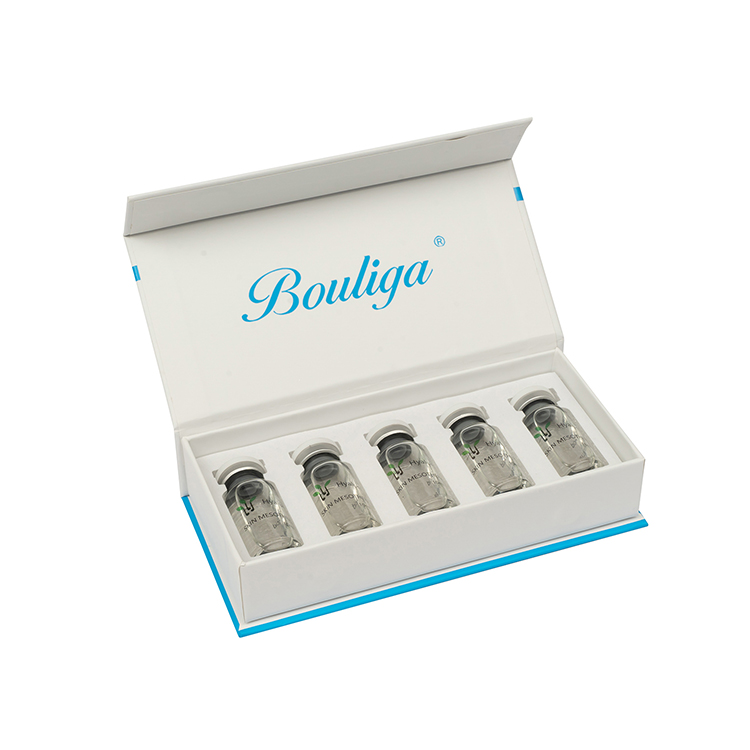
The physical properties, or rheology, of an injectable determine its behavior beneath the skin. A standard hyaluronic acid mesotherapy filler possesses low viscosity and high elasticity. It flows easily, much like water, allowing it to spread thinly across a large surface area. The HA concentration is typically lower, ranging from 5mg/ml to 15mg/ml. This watery consistency is perfect for superficial micro-injections where the goal is widespread epidermal hydration without adding bulk.
Premium skin boosters feature high-concentration hyaluronic acid, often between 20mg/ml and 32mg/ml, with a thicker, more cohesive consistency. The specific molecular weighting in boosters allows them to form a stable gel. When injected into the deep dermis, this gel stays relatively localized, drawing in massive amounts of water to create a structural cushion. The higher concentration and thicker rheology enable skin boosters to remodel tissue rather than simply wetting it.
Pure hyaluronic acid provides excellent hydration but cannot address complex biochemical skin concerns. Mesotherapy formulations incorporate a vast array of biorevitalizers that provide specific clinical benefits absent in pure HA boosters. These cocktails are highly customizable based on the patient's exact presentation.
Many mesotherapy cocktails include glutathione, a powerful antioxidant that inhibits melanogenesis, making it highly effective for skin brightening and treating hyperpigmentation. Others incorporate polynucleotides (derived from salmon DNA) to accelerate cellular repair, reduce inflammation, and promote angiogenesis. The clinical efficacy of these added ingredients makes mesotherapy highly versatile for treating conditions like melasma, post-inflammatory hyperpigmentation, and chronic dullness.
The inclusion of targeted peptide complexes offers another distinct advantage. Peptides in mesotherapy actively signal cellular repair and regulate pigment production at a biochemical level. Skin boosters rely primarily on the physical presence of hyaluronic acid to mechanically stretch fibroblasts. This creates a clear clinical choice: select mesotherapy for broad-spectrum, targeted nutrient delivery, or select skin boosters for highly focused, sustained structural hydration.
Selecting the appropriate treatment requires matching the product's capabilities to specific aesthetic goals. Misalignment is the primary cause of patient dissatisfaction in aesthetic medicine.
Goal: Textural improvement, deep hydration, and laxity correction. If the skin feels structurally thin, crepey, or chronically dry, the success criteria favor skin boosters. Their ability to hold water in the deep dermis provides the necessary structural support and bio-remodeling.
Goal: Pigmentation correction, superficial glow, and nutrient replenishment. If the primary concerns are surface-level dullness, uneven tone, dark circles, or early signs of environmental damage, the success criteria favor mesotherapy. The vitamin and peptide blends directly address these superficial issues.
Age correlates with specific skin conditions, providing a useful baseline for treatment selection in clinical practice.
Patients in their 20s and early 30s generally possess strong collagen reserves. Their primary goal is preventative maintenance, often termed "prejuvenation." Mesotherapy is highly effective for this demographic. It maintains a healthy glow, provides early hydration, and delays the onset of fine lines without introducing heavy, cross-linked gels into young tissue.
Patients in their 40s and beyond require corrective interventions. Hormonal changes and chronological aging lead to severe dermal volume depletion, elastosis, and structural laxity. Skin boosters are the superior choice for this demographic. They provide the necessary bio-remodeling to address severe laxity and restore the depleted dermal cushion that uncross-linked mesotherapy cannot rebuild.
Anatomical considerations dictate the choice between a booster and a mesotherapy protocol. Different areas of the face and body require different rheological properties.
Mesotherapy excels in delicate, thin-skinned areas. The tear trough and under-eye region are notoriously difficult to treat. Heavy products easily cause persistent puffiness, lymphatic obstruction, or the Tyndall effect (a bluish tint under the skin). A lightweight mesotherapy solution delivers hydration and brightening agents to the under-eye without the risk of fluid retention or lumps.
Skin boosters are superior for broad-area rejuvenation. The cheeks, lower face, neck, décolletage, and dorsal hands require significant structural support to overcome gravity and repetitive motion. The cohesive nature of skin boosters provides a lifting and firming effect across these larger, thicker-skinned zones.
Understanding the time commitment required for each treatment ensures long-term patient compliance and satisfaction.
The mesotherapy protocol involves a high initial time investment. A standard approach requires weekly or bi-weekly clinic visits for the first four to six weeks. This intensive loading phase saturates the tissue with nutrients. Following this, patients must commit to monthly maintenance sessions to sustain the results. This schedule demands significant flexibility.
The skin booster protocol offers a much lower clinic frequency. Most protocols involve just two initial sessions spaced four weeks apart. Once the bio-remodeling process initiates, patients typically only return for a single maintenance session every six to nine months. This scalability makes skin boosters highly attractive for patients with demanding schedules.
Evaluating the return on investment requires calculating the total sessions required over a twelve-month period, rather than looking at the price of a single syringe.
A single session of a hydrating mesotherapy dermal filler requires less upfront investment than a premium skin booster. However, because mesotherapy requires an intensive loading phase followed by monthly maintenance, a patient undergoes ten to twelve sessions in a year. A skin booster protocol requires only three sessions annually (two initial, one maintenance). The cheaper per-session cost of mesotherapy frequently results in a higher annual expenditure and significantly more time spent in the clinic.
Clinical Feature | Mesotherapy Protocol | Skin Booster Protocol |
|---|---|---|
Primary Clinical Goal | Superficial glow, pigmentation, cellular nutrients | Deep hydration, tissue remodeling, laxity correction |
Hyaluronic Acid Type | Uncross-linked (fluid, fast-absorbing) | Cross-linked or thermally stabilized (cohesive gel) |
Visible Longevity | 4 to 12 weeks | 6 to 9 months |
Initial Loading Phase | 3 to 6 sessions (spaced 1-2 weeks apart) | 2 sessions (spaced 4 weeks apart) |
Maintenance Frequency | Every 1 to 2 months | Every 6 to 9 months |
Optimal Anatomical Zones | Under-eyes, superficial epidermis, scalp | Mid-face, lower face, neck, décolletage, hands |
Injection Depth | Epidermis to superficial dermis (1-4mm) | Deep dermis |
The physical experience of receiving these treatments differs based on the required injection depth and the specific technique utilized by the practitioner.
Mesotherapy often utilizes the nappage technique or a mesogun. This involves a series of rapid, superficial epidermal scratches or micro-injections. While the needle barely penetrates the skin, the sheer volume of injection points causes a widespread stinging sensation. Skin boosters require deeper dermal boluses. The practitioner injects larger volumes of product at specific anatomical points using a needle or a blunt-tipped cannula. This feels like a traditional filler injection, characterized by a localized dull pressure rather than a sharp scratch.
Clinics standardly apply high-strength topical anesthetics (typically a compound of lidocaine, tetracaine, and prilocaine) for 20 to 30 minutes prior to either procedure to manage comfort effectively.
Visual recovery times vary significantly between the two modalities based on the injection pattern and product viscosity.
Mesotherapy Recovery: Patients expect multiple tiny micro-blebs (small bumps resembling mosquito bites) across the entire treated area. Because the technique involves dozens of superficial punctures, there is a higher risk of pinpoint bruising, diffuse redness, and mild epidermal swelling. These effects resolve within 24 to 48 hours as the watery fluid disperses.
Skin Booster Recovery: Advanced booster protocols utilize specific injection patterns, such as the 5-point Bio Aesthetic Points (BAP) technique. This minimizes the number of injection sites to just five per side of the face. Patients experience localized swelling at these specific points, which dissipates within 12 to 24 hours. Bruising is less common but possible.
Both treatments maintain excellent safety profiles when performed by qualified professionals, but they carry distinct clinical risks.
Mesotherapy cocktails contain complex mixtures of vitamins, minerals, amino acids, and peptides. This complexity increases the statistical risk of localized allergic reactions or contact dermatitis. Patients with highly reactive skin or known allergies to specific vitamins must undergo thorough patch testing or consultation before proceeding with multi-ingredient mesotherapy.
Skin boosters utilize pure, highly biocompatible hyaluronic acid, making allergic reactions exceedingly rare. Because the gel is thicker and injected deeper into the dermis, there is a theoretical risk of vascular occlusion—a severe complication where the product inadvertently enters and blocks a blood vessel. While this is rare with hydrating products compared to thick volumizing fillers, it remains a critical clinical consideration.
The ultimate mitigation strategy for any aesthetic injectable is practitioner selection. The safety and efficacy of the treatment depend entirely on optimal depth placement and anatomical knowledge. Selecting a board-certified dermatologist, plastic surgeon, or highly trained aesthetic nurse supersedes product brand selection. A skilled practitioner navigates facial vasculature safely, utilizes aspiration techniques or cannulas when appropriate, and ensures the product is placed in the exact dermal plane required to trigger the desired biological response.
To move forward effectively with your injectable hydration strategy, execute the following steps:
Schedule a baseline clinical assessment to evaluate your specific degree of skin laxity, dermal thickness, and hydration levels.
Document your current skincare routine and previous aesthetic treatments to identify gaps in your collagen stimulation protocol.
Define your acceptable downtime and clinic availability to determine if you can accommodate a high-frequency mesotherapy schedule or require a low-maintenance booster.
Establish a 12-month aesthetic budget that accounts for both the initial loading phases and the required maintenance sessions for your chosen treatment.
A: No. Traditional dermal fillers use highly cross-linked, thick hyaluronic acid designed to restore lost volume, lift tissue, and alter facial contours. Mesotherapy focuses purely on skin quality, hydration, and cellular nourishment. It utilizes uncross-linked hyaluronic acid and vitamins to improve skin texture without adding volume or changing your facial shape.
A: To achieve optimal clinical results, you need an initial loading phase of 3 to 6 sessions spaced one to two weeks apart. While you notice a superficial glow after the first session, structural improvements require this cumulative approach, followed by monthly maintenance treatments.
A: Yes. Mesotherapy is highly effective for treating the delicate under-eye area. It addresses dark circles, fine lines, and fatigue in the tear trough without the risk of the Tyndall effect (a bluish discoloration) or the over-puffiness frequently associated with traditional fillers or heavy skin boosters.
A: Yes, combining these treatments is a highly viable clinical strategy. Practitioners use skin boosters to provide deep, structural hydration and bio-remodeling in the lower face and cheeks, while simultaneously using mesotherapy to target superficial epidermal concerns like pigmentation or under-eye dullness.
A: Pain perception varies, but the sensations differ. Mesotherapy involves many superficial scratches, feeling like a widespread stinging sensation. Skin boosters involve fewer, deeper injections, feeling like a localized dull pressure. Topical numbing cream effectively manages discomfort for both procedures.
A: Swelling from mesotherapy presents as tiny bumps (blebs) that resolve within 24 to 48 hours. Skin boosters cause localized swelling at the specific injection points, which subsides within 1 to 3 days. Any associated pinpoint bruising from either treatment takes up to a week to fully fade.
