

Views: 0 Author: Site Editor Publish Time: 2026-10-21 Origin: Site


Can mesotherapy really improve your skin? Its benefits depend on the ingredients, treatment method, and individual needs. Mesotherapy may support skin hydration, smoother texture, and a fresher appearance. This guide explores its main benefits, expected results, and potential risks.
Body fillers are injectable materials intended to add volume or alter the appearance of selected tissues. Their effects depend on their composition and the location where they are used. Hyaluronic acid fillers can bind water and occupy space within tissue. Other materials have different properties and may remain in the body for different periods. Therefore, the term “body fillers” does not describe one uniform treatment.
Before considering any injectable product, it is essential to distinguish its marketed purpose from its authorized indications. In the United States, the FDA has not approved dermal fillers for breast or buttock augmentation. It warns that injecting fillers for these purposes can cause serious complications.
Product availability on a supplier website does not establish approval or clinical suitability.
Hyaluronic acid is a substance that can attract and retain water. Some dermal fillers use it to add volume or improve contours in specifically authorized treatment areas. The physical properties of each formulation influence how it behaves after injection. Concentration, gel structure, and other formulation details can affect its performance.
Hyaluronic acid fillers are not all interchangeable. A product developed for one facial area may not be suitable for another area, much less for large-volume body enhancement. The injection site, tissue structure, amount used, and potential complications all affect clinical decisions. Practitioners should consult the exact product labeling rather than relying on the ingredient name alone.
Some hyaluronic acid fillers can be reduced using hyaluronidase when clinically appropriate. However, this does not make every complication easily reversible. Treatment may require additional medical intervention, and some injuries can be permanent. Patients should understand these limitations before proceeding.
For buyers reviewing Bouliga's body filler product range, the key considerations are the exact formulation, intended route, technical documentation, and authorization in the destination market. Product descriptions should be treated as starting points for verification, not proof of clinical effectiveness.
Body fillers, implants, and fat transfer all aim to change body contours, but they use different methods. Injectable fillers place a material into tissue. Implants use a medical device to create or maintain volume. Fat transfer moves a patient's own fat from one body area to another through a surgical procedure.
Each approach has its own eligibility requirements, recovery process, and complication profile. Implants may involve risks such as infection, rupture, or displacement. Fat transfer involves surgical risks, including complications associated with liposuction and anesthesia. Injectable fillers can cause swelling, infection, nodules, tissue damage, and other adverse events.
These methods should not be compared only by price or recovery time. The intended result, amount of volume required, medical history, and evidence for each option all matter. A qualified plastic surgeon can explain which approaches are appropriate for the patient's goals.
It is also important to distinguish approved breast implants from injectable silicone. These are not equivalent products. The FDA warns that injectable silicone used for body contouring can cause severe injury, permanent disfigurement, embolism, stroke, and death.
Note: Never assume an injectable product is suitable for breast or buttock augmentation simply because its marketing materials mention those applications.

The phrase “body fillers” appears in product marketing for several applications. These may include breast enhancement, buttock augmentation, hip contouring, and correction of selected depressions. However, a marketed application is not necessarily an established or authorized clinical use. Evidence and regulations differ between countries and products.
For example, the FDA has approved certain dermal fillers for specific facial uses and for the back of the hand. It has not approved dermal fillers for breast or buttock enlargement.
This distinction matters when evaluating product pages, supplier claims, and treatment proposals.
Some suppliers list hyaluronic acid products under breast filler or breast enhancement categories. These listings may describe their intended commercial positioning, but they do not establish that injection into breast tissue is safe or approved. Patients should not treat a product's name, syringe size, or stated ingredient as evidence of suitability.
Breast enlargement is a medical decision that requires an appropriate consultation. Depending on the patient's goals and health history, a qualified specialist may discuss established options, including approved implants or other suitable procedures. Each option has its own benefits, risks, and limitations.
For readers researching the category, 10ml Breast Injection – Hyaluronic Acid Filler Injection is a listed product from Bouliga. Its inclusion here identifies a supplier offering, not a recommendation for breast injection. Before any clinical use, qualified professionals must verify the product's authorization, labeling, supporting evidence, and intended route in the relevant jurisdiction.
Patients should avoid unlicensed providers and products offered without adequate documentation. They should also seek independent medical advice rather than relying solely on a seller's promotional information. In the United States, injectable fillers are not FDA-approved for breast augmentation, so alternative approaches should be discussed with a qualified clinician.
Buttock and hip contouring aim to change the body's silhouette. Common concerns include perceived volume loss, asymmetry, or the appearance of hip dips. However, these concerns do not automatically make injectable fillers an appropriate solution. The treatment area and amount of material required can change the risk substantially.
The FDA advises against using dermal fillers for buttock enlargement or other body-contouring enhancement. Large-volume injections can lead to serious injury, including infection, persistent pain, scarring, disfigurement, and potentially fatal complications.
People considering contour changes should seek assessment from a qualified medical specialist. The consultation should cover realistic outcomes, alternatives, recovery, and possible complications. The practitioner should explain the evidence for the proposed procedure and its regulatory status.
For clinics and distributors, body-contouring terminology also requires careful review. A supplier listing a product for buttocks or hip dips does not establish that the product is appropriate for injection into those areas. Procurement teams should verify its authorization in the destination market and avoid making unsupported clinical claims.
Note: The FDA's position applies in the United States. Requirements elsewhere may differ, but local authorization and clinical evidence must still be verified.
Body fillers differ in composition, intended use, and clinical characteristics. Buyers should not classify products solely by the body area mentioned in their names. Instead, they should identify the material, review its technical specifications, and confirm whether it is authorized for the proposed application.
The same approach applies when comparing suppliers. Product photographs and promotional descriptions may help identify an item, but they cannot establish sterility, safety, or effectiveness. Reliable purchasing decisions require supporting documentation and a clear understanding of the target market's regulations.
Hyaluronic acid fillers vary in concentration, gel structure, viscosity, and other physical characteristics. These differences can affect product handling and performance. However, a thicker gel or higher concentration does not automatically mean better results. Suitability depends on the exact formulation and its authorized indication.
Cross-linked hyaluronic acid is designed to resist breakdown differently from non-cross-linked forms. This distinction may influence how a formulation behaves in its intended application. It does not, by itself, establish that a product is suitable for large-volume body enhancement.
Buyers may encounter products described as breast fillers, body fillers, or multipurpose HA fillers. For example, Bouliga lists a Nourishing Breast Plumping Gel Filler Hyaluronic Breast Injection. The product name reflects its market positioning, but it should not be interpreted as proof of regulatory approval or clinical suitability for breast injection.
Professional purchasers should request full product specifications, instructions for use, sterility information, batch traceability, and applicable regulatory documentation. They should also verify whether the product's authorization covers the intended treatment area and injection route. These checks help prevent inappropriate product selection and unsupported marketing claims.
A product specification sheet should clearly identify the formulation, package size, ingredients, storage requirements, manufacturer, and intended route of administration. Where applicable, it should also provide information about shelf life, lot identification, and quality-control procedures. These details help buyers compare products and assess supplier reliability.
Package volume alone does not determine how a product should be used. A 10 ml syringe, for example, does not prove that the material is suitable for breast enlargement or another large-area procedure. The amount of product required and its safe use depend on the exact formulation, clinical evidence, and authorized instructions.
Clinics and distributors should request documentation before committing to a purchase. They should also confirm whether the documents apply to the specific product being supplied, rather than a similar product from the same manufacturer. Product names and appearance can be similar even when their intended uses differ.
Bouliga's cross-linked hyaluronic acid injectable filler listing is one example of a product marketed for multiple applications. Buyers should independently verify the exact indications and authorization before considering clinical use. Marketing breadth should never replace product-specific evidence.
Tip: Create a product-verification checklist covering composition, intended route, approved indications, sterility, traceability, and destination-market requirements.
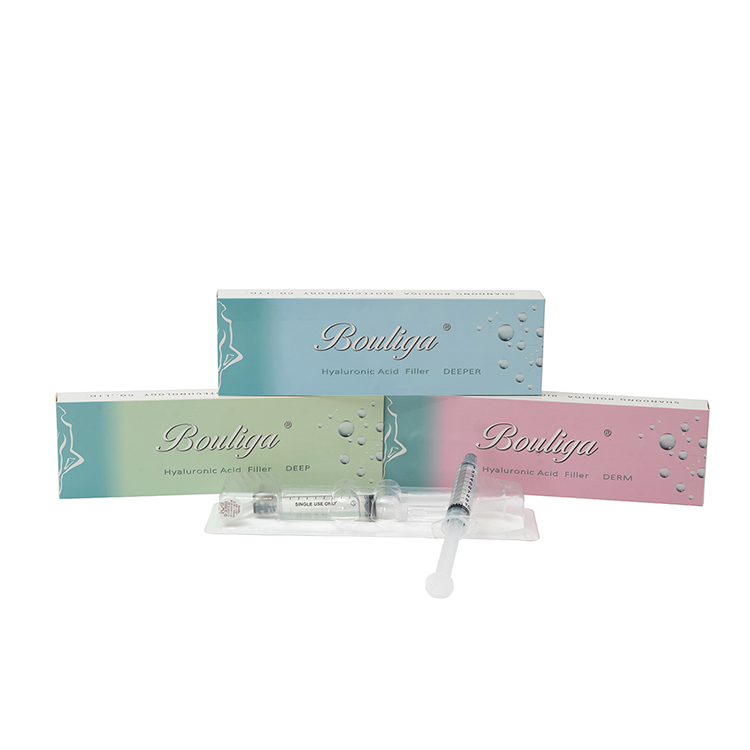
Body filler injections are medical procedures, not simple cosmetic services. Their risks depend on the substance, treatment area, injection technique, and provider's training. Complications may be temporary, but some can require surgery or result in permanent injury. Risk assessment is particularly important when products are marketed for uses outside their authorized indications.
The FDA identifies several possible complications of dermal fillers, including infection, allergic reactions, nodules, tissue damage, and accidental injection into a blood vessel.
The risks associated with unapproved body applications are not necessarily well characterized.
Common reactions to approved filler procedures may include redness, swelling, tenderness, and bruising. Other complications can include infection, persistent lumps, inflammation, and allergic reactions. Accidental injection into a blood vessel may block blood flow and cause tissue death or other severe injury.
The risk profile depends on the specific product and where it is injected. Findings from an approved facial application cannot automatically establish safety in breast or buttock tissue. Large-volume body enhancement raises additional concerns, and the FDA specifically advises against dermal filler injections for these purposes in the United States.
Patients should seek treatment from appropriately licensed professionals who understand the relevant anatomy and can manage complications. They should never inject fillers themselves or accept treatment from unqualified providers. Product packaging, traceability, and clear informed consent are essential safeguards.
After an injection, unusual or severe pain, pale or discolored skin, rapidly worsening swelling, fever, or other concerning symptoms require prompt medical assessment. Vision changes, sudden weakness, difficulty speaking, or other signs of a possible vascular emergency require emergency care. Patients should receive clear instructions about whom to contact if complications occur.
Regulatory status must be checked for the specific product, intended use, and country where treatment will take place. A product's availability online does not establish authorization. Similarly, a supplier's general quality claims do not prove that a particular injection procedure has been evaluated by regulators.
In the United States, the FDA has not approved dermal fillers for breast or buttock augmentation. Other jurisdictions may have different requirements, so buyers must check the relevant national authority and product documentation. They should not assume that registration for one purpose authorizes every marketed application.
For B2B purchasers, a thorough review should include manufacturer identity, product labeling, batch records, quality documentation, and evidence supporting the proposed use. Marketing materials should accurately reflect the product's authorized indications. Distributors should avoid promising clinical outcomes that have not been established.
Note: Regulatory compliance and product quality are separate checks. Both must be addressed before a product is considered for clinical use.
Choosing a body filler requires a clear understanding of the desired outcome, available evidence, and potential risks. Patients should begin with a consultation from a qualified healthcare professional. Clinics and distributors should begin with product verification and regulatory review. Neither group should rely on promotional claims alone.
A suitable decision process considers the product, procedure, provider, and destination market together. It also distinguishes a manufacturer's stated purpose from an independently established clinical benefit. These checks support safer decisions and more responsible communication between suppliers and professional customers.
Patients should explain their goals and medical history during consultation. The clinician can then discuss suitable options, likely outcomes, and relevant limitations. Medical history, previous procedures, allergies, and current medications may influence treatment decisions.
Patients should ask what material will be used, whether its intended application is authorized, and what evidence supports the proposed procedure. They should also understand recovery expectations and the possibility of further treatment. If the available evidence is weak or the proposed use is not authorized, they should consider alternatives.
For body enhancement, alternatives may include approved implants or appropriate surgical procedures, depending on the treatment area and individual circumstances. These options also involve risks and require professional assessment. No procedure should be selected solely because it is advertised as minimally invasive or offers a short recovery period.
Clinics should document consultations, informed consent, product details, and follow-up arrangements. This approach improves communication and helps practitioners respond appropriately if an adverse event occurs. Clear records also support ongoing quality management.
Professional buyers should assess suppliers through documented criteria rather than price alone. Relevant factors include manufacturing information, product traceability, quality-control documentation, storage requirements, customer support, and regulatory compliance. The supplier should be able to explain which documents apply to the exact product being offered.
Buyers should also distinguish between a broad product catalog and verified clinical indications. A product marketed for several body areas may not be authorized for every listed use. Claims about longevity, effectiveness, and safety should be supported by appropriate evidence.
Shandong Bouliga Biotechnology Co., LTD. offers a range of products marketed for aesthetic applications, including hyaluronic acid-based fillers. Buyers can review its product information as part of their supplier research. They should then request the documentation needed to evaluate each product independently.
A transparent supplier evaluation process benefits both parties. Buyers gain a clearer understanding of product specifications and limitations. Suppliers can communicate their offerings more accurately and avoid unsupported medical claims. Ultimately, product selection should prioritize evidence, compliance, and patient safety over marketing appeal.
Tip: Before placing an order, confirm the product's intended use, applicable authorization, quality documentation, traceability, and supplier support arrangements.
Body Fillers vary in composition, applications, and safety risks. Product suitability depends on clinical evidence and regulatory approval. Bouliga offers body filler products, including hyaluronic acid formulations, for professional evaluation. Buyers should verify product quality and intended use before clinical application.
A: Body fillers are injectable materials designed to alter volume or contours in specific areas.
A: Hyaluronic acid fillers bind water and add volume in approved treatment areas.
A: Applications vary, but breast and buttock injections carry significant safety and regulatory concerns.
A: The FDA has not approved dermal fillers for breast augmentation in the United States.
A: Costs vary by product, provider, treatment area, and procedure.
A: Fillers use injectable materials, while implants are medical devices requiring a different procedure.
