

Views: 0 Author: Site Editor Publish Time: 2026-10-21 Origin: Site


Can mesotherapy for face really improve your skin? It may help address dehydration, fine lines, and uneven skin tone. However, results depend on the formulation and your skin condition. This guide explains its uses, benefits, limitations, and safety considerations.
Dehydrated skin may appear dull, rough, or less supple. Hyaluronic acid is commonly discussed in facial mesotherapy because it can bind water and support skin hydration. Certain injectable formulations may improve the appearance of dryness and help skin look smoother. Results depend on the specific product, its properties, and the individual's skin condition.
However, injectable treatment is not always necessary for dehydration. Moisturizers, gentle cleansers, and consistent skincare can also support the skin barrier. A qualified practitioner should assess whether injections offer a meaningful benefit beyond topical care.
Fine lines can become more noticeable when skin is dry or loses elasticity. Some mesotherapy formulations may improve the appearance of superficial lines by increasing hydration and supporting skin quality. They should not be expected to eliminate deep wrinkles or reproduce the effects of every established injectable treatment.
The term mesotherapy covers different formulations and techniques. Evidence for one product cannot automatically validate another. Therefore, realistic expectations and product-specific clinical information matter more than broad anti-aging claims.
Some formulations contain ingredients marketed for brighter-looking skin. These products may aim to improve the appearance of uneven tone, but results vary. Melasma, post-inflammatory hyperpigmentation, sunspots, and other pigmentation concerns have different causes and may require different treatments.
Mesotherapy should not be presented as a guaranteed whitening solution. A practitioner should first identify the likely cause of pigmentation and consider evidence-based alternatives. Daily broad-spectrum sunscreen remains important for preventing further sun-related discoloration.
Skin elasticity changes with age, sun exposure, and other biological factors. Certain skin boosters are designed to improve hydration and the appearance of skin texture. Some formulations may also aim to support longer-term changes in skin quality, but the evidence depends on their composition and clinical testing.
Hydration-related improvements should not be confused with lifting or restoring significant lost facial volume. People with pronounced skin laxity may need a different treatment plan.
Better hydration may help dull skin look fresher. However, evidence supporting mesotherapy for established acne scars or enlarged pores is less consistent. Deep, depressed, or raised scars often need targeted assessment and treatments suited to their type.
Mesotherapy may be considered for selected early skin-quality concerns, but it is not a universal solution for aging. Treatment decisions should reflect the primary concern, the available evidence, and the person's medical history.
Tip: Cosmetic improvement, clinical effectiveness, and regulatory approval are different concepts. Product claims should be checked against reliable evidence and the requirements of the intended market.
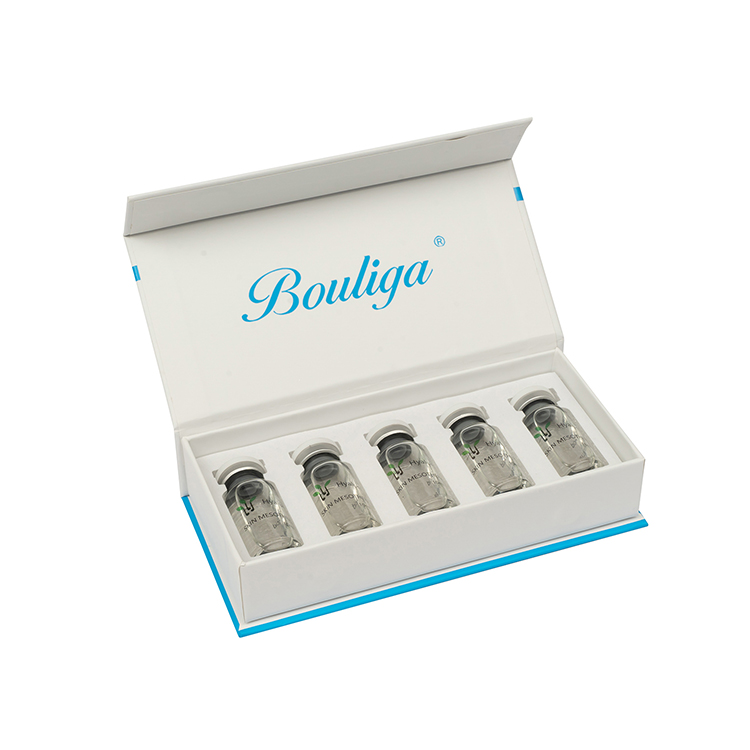
Facial mesotherapy uses multiple small injections to deliver a formulation into selected skin layers. This differs from topical skincare, which is applied to the skin's surface. Injection depth, product composition, and technique influence how a treatment behaves in the tissue. These decisions require appropriate professional training and knowledge of facial anatomy.
The procedure is not standardized across all products. Different formulations may have different intended uses, handling requirements, and safety profiles. A product described as a mesotherapy filler should not automatically be treated as equivalent to a conventional dermal filler or a skin booster.
Commonly discussed ingredients include hyaluronic acid, vitamins, peptides, and antioxidants. Each has a different intended role, and evidence supporting one ingredient does not establish the effectiveness of every formulation containing it.
Hyaluronic acid is associated with moisture retention. Vitamins and antioxidants may be included in formulations intended to support skin appearance, while peptides are marketed for various skin-quality benefits. The concentration, purity, compatibility, and formulation all matter. Ingredient lists alone cannot establish clinical effectiveness or injection safety.
Skin boosters are injectable products intended to improve selected skin-quality characteristics. Depending on the formulation, they may focus on hydration, smoothness, or elasticity rather than substantial facial contouring. Some hyaluronic acid-based treatments have published clinical research, but findings should be interpreted in the context of the specific product and study design.
Before selecting a product, practitioners should review its instructions for use, evidence, and approved indications in their market. These checks help distinguish a substantiated benefit from a general marketing claim.
Tip: Clinics and distributors should request ingredient specifications, traceability documents, storage requirements, and product-specific safety information before procurement.
Hyaluronic acid attracts and retains water, making it relevant to treatments focused on hydration and skin appearance. However, its behavior depends on the formulation, molecular characteristics, concentration, and injection technique. Cross-linked dermal fillers and non-cross-linked products may have different properties and intended uses.
When evaluating Mesotherapy Face Filler, buyers should verify the exact composition and intended use rather than infer its effects from the product name alone. The manufacturer's documentation should clarify whether the product is intended for superficial skin-quality treatment or another application.
Glutathione and vitamin C appear in some cosmetic formulations marketed for brighter-looking skin. However, the presence of these ingredients does not prove that an injectable treatment can safely or reliably remove pigmentation. Evidence, formulation quality, dosage, and route of administration all affect how claims should be assessed.
Skin brightening also differs from treating a diagnosed pigmentation disorder. Professional evaluation is important, particularly for persistent melasma or pigmentation that changes over time. Broad claims such as permanent whitening should not replace product-specific evidence.
Peptides and polynucleotide-based ingredients, sometimes marketed as PDRN or PN, are used in some skin-rejuvenation products. Their proposed roles vary by ingredient and formulation. Research on one compound or delivery method cannot establish the safety and effectiveness of another.
Buyers should examine clinical evidence relevant to the actual product, not just studies about a similar ingredient. They should also confirm regulatory status and whether the product is suitable for the intended treatment area.
For an overview of available formulations and product categories, visit the Bouliga Mesotherapy Filler range. Product information can support initial screening, but it should be supplemented by technical documentation and appropriate clinical evidence.
The timing of visible results depends on the product and treatment. Some people may notice temporary changes in skin fullness or hydration relatively soon, while other outcomes require follow-up assessment. Early swelling should not be mistaken for a lasting treatment benefit.
A useful evaluation compares skin condition before and after treatment under consistent lighting and similar conditions. Photographs, patient feedback, and appropriate clinical assessments can help document changes. Expectations should remain realistic, particularly when the supporting evidence is limited.
There is no universal session schedule for all facial mesotherapy products. Treatment frequency depends on the formulation, its instructions, the skin concern, and the practitioner's assessment. Some published studies of hyaluronic acid-based treatments have used multiple sessions, but those protocols should not be transferred automatically to other products. Patients should not increase treatment frequency simply because results appear subtle. Repeated injections carry cumulative procedural considerations, and the appropriate interval must be determined by a qualified professional.
Results may vary according to product composition, treatment technique, skin condition, and ongoing skincare. Some improvements may be temporary, while the duration of other effects remains uncertain. There is no reliable duration that applies to every product marketed as facial mesotherapy.
A treatment plan should explain the expected outcome, likely duration, maintenance requirements, and possible costs. It should also identify when treatment should be reassessed rather than repeated automatically.
Tip: Published results apply to the studied formulation and protocol. They should not be used as a guarantee for other mesotherapy products.
Facial mesotherapy involves injections, so it carries risks. Common short-term effects may include redness, swelling, bruising, tenderness, and discomfort around injection sites. Infection, inflammatory reactions, persistent lumps, and allergic reactions are also possible. The nature and severity of complications depend on the product and procedure.
Some injectable products can cause rare but serious complications, including damage to blood vessels and surrounding tissue. Sudden visual changes, severe or unusual pain, or pale, gray, or blue skin near an injection site require immediate medical attention. Patients should know how to contact their practitioner and obtain urgent care.
Suitability requires individual assessment. Active skin infections or inflammation may mean treatment should be postponed. A practitioner should also review allergies, medications, bleeding risks, pregnancy, breastfeeding, and relevant medical history. The appropriate precautions depend on the specific product and its instructions.
People should not assume that a cosmetic product is safe for injection simply because its ingredients are familiar. Products intended for topical use are not automatically suitable for injectable procedures.
Product quality and practitioner expertise are central to safe treatment. The product should have clear labeling, traceable sourcing, appropriate storage conditions, and regulatory authorization for its intended use in the relevant market. Practitioners need appropriate qualifications, knowledge of facial anatomy, sterile technique, and the ability to recognize complications.
The U.S. FDA advises consumers to seek licensed healthcare professionals experienced in injectable treatments and warns against buying fillers directly for self-injection. Regulatory requirements differ by country, so buyers must verify the applicable local rules.
Tip: Before procurement, clinics should verify the product's intended use, batch traceability, instructions for use, and local authorization.
Topical skincare is generally a practical first step for managing dryness. Moisturizers support the skin barrier, while ingredients such as hyaluronic acid can help retain moisture at the skin's surface. These products avoid injection-related risks and are suitable for many everyday skincare routines.
Mesotherapy introduces ingredients through injections and may be considered when a qualified practitioner identifies a suitable indication. However, it involves additional cost and procedural risks. It should not automatically replace a consistent skincare routine.
Chemical peels use specific acids to exfoliate the skin at controlled depths. Depending on the peel and indication, they may help improve certain forms of discoloration and uneven texture. Their suitability depends on skin type, pigmentation risk, product strength, and professional technique.
Mesotherapy uses injectable formulations rather than surface exfoliation. Neither treatment is appropriate for every pigmentation concern. A professional assessment helps determine the likely cause of discoloration and the most suitable option.
Microneedling uses controlled needle punctures to trigger a wound-healing response. It may be used for selected concerns involving skin texture and acne scarring. Mesotherapy instead delivers a formulation through injections, so its intended mechanism and risks differ.
These treatments are not interchangeable. The appropriate choice depends on the skin concern, available evidence, medical history, and tolerance for recovery time. Combining procedures should only be considered after professional assessment.

Start by identifying the main objective. It might be hydration, smoother-looking skin, or improved skin texture. Avoid selecting a product solely because it advertises multiple benefits. A clear treatment goal makes it easier to assess suitability and measure results.
For clinics and professional buyers, the product's intended use should align with the service being offered. Review the composition, available evidence, contraindications, and treatment requirements before making a decision.
Check the ingredient list, manufacturer details, batch identification, storage requirements, and instructions for use. Verify whether the product is authorized for injection and for the intended treatment area in the relevant market. Do not assume that an online listing establishes regulatory approval.
Bouliga provides information about its products through its official website and dedicated product pages. This information can help buyers begin their review, but independent verification and appropriate documentation remain necessary.
A qualified practitioner should explain the expected benefits, limitations, risks, and alternatives before treatment. Patients should understand the likely recovery period, potential complications, and follow-up requirements. They should also know what to do if unexpected symptoms develop.
Professional buyers should assess supplier responsiveness, documentation quality, product consistency, and regulatory suitability. These factors are more useful than relying on broad claims about whitening, regeneration, or anti-aging effects.
Tip: Build a product evaluation checklist covering intended use, composition, clinical evidence, regulatory status, storage, and adverse-event procedures.
Mesotherapy for face may improve hydration, fine lines, and skin texture. Results depend on the formulation, individual needs, and professional care. Bouliga offers mesotherapy face filler products for aesthetic applications, helping professional buyers explore options for targeted skin-quality treatments.
A: Mesotherapy for face may improve dehydration, fine lines, dullness, and uneven skin tone.
A: Evidence is limited. Established acne scars may require other targeted treatments.
A: Results vary by formulation, skin condition, and maintenance routine.
A: It carries risks, including swelling, bruising, and infection. Seek qualified professional care.
A: Hyaluronic acid may improve moisture retention and skin smoothness.
