

Views: 0 Author: Site Editor Publish Time: 2026-10-12 Origin: Site


The demand for non-surgical body contouring has outpaced the development of standardized clinical guidelines, leaving practitioners and patients to navigate a complex landscape of high-volume injectable materials. Selecting the appropriate injectable material for large-scale tissue augmentation requires balancing immediate volumization needs with long-term biocompatibility, rheological stability, and patient safety. You cannot treat the gluteal region with the same delicate formulations used for tear troughs. This guide examines the material science behind modern body fillers, comparing cross-linked polymers and biostimulatory agents to establish an evidence-based framework for evaluating efficacy, safety profiles, and anatomical suitability. We will break down the exact rheological requirements needed to withstand mechanical stress in high-mobility areas and outline the clinical protocols necessary for successful integration.
Material Dominance: Cross-linked hyaluronic acid remains the primary choice for reversible, predictable volume, while biostimulators (PLLA, CaHA) offer progressive collagen synthesis with different risk profiles.
Rheological Requirements: Body augmentation demands fillers with significantly higher G-prime (firmness) and cohesivity compared to facial injectables to withstand mechanical stress in areas like the gluteal region.
Safety and Reversibility: The availability of hyaluronidase makes hyaluronic acid body filler the safest option for large-volume corrections, mitigating severe vascular risks.
Regulatory Landscape: Many high-volume applications remain off-label in various jurisdictions; strict adherence to anatomical safety zones and material compliance is mandatory.
Search engines frequently mix clinical terms with automotive repair products. You must clearly separate medical injectables from industrial surface compounds. The broad term often surfaces lightweight polyester resins, styrene, and fiberglass alongside aesthetic products. These industrial materials serve entirely different purposes and operate under completely different chemical principles.
Industrial composites utilize highly reactive chemicals. Automotive repair shops rely on metal-filled products, calcium carbonate, and Kevlar pulp mixed with a methyl ethyl ketone peroxide (MEKP) hardener. These materials undergo an exothermic reaction to cure into rigid, non-porous structures designed to repair metal or fiberglass panels. They are highly toxic to human tissue. If introduced into biological systems, these industrial resins cause immediate severe necrosis, systemic toxicity, and require massive surgical debridement.
Modern aesthetic body contouring relies exclusively on highly purified, biocompatible polymers. Medical-grade injectables undergo rigorous sterilization, cross-linking, and dialysis processes to remove residual proteins and unreacted chemicals. They integrate with human subcutaneous tissue safely. Clinical practice strictly avoids the non-medical synthetic polymers and sprayable resins used in collision repair. We only evaluate sterile, laboratory-synthesized compounds designed specifically for human tissue augmentation.
Characteristic | Medical-Grade Injectables | Industrial Surface Compounds |
|---|---|---|
Primary Composition | Hyaluronic Acid, PLLA, CaHA | Polyester resin, styrene, fiberglass |
Curing Mechanism | Tissue integration, water binding | Exothermic chemical reaction (MEKP) |
Biological Impact | Biocompatible, biodegradable | Highly toxic, causes tissue necrosis |
Application Method | Sterile cannula or needle injection | Spatula application, sanding |
Reversibility | Often reversible (hyaluronidase) | Permanent, requires mechanical removal |
The aesthetic industry has moved beyond relying solely on surgical fat grafting and silicone implants. Minimally invasive procedures now offer reduced downtime and predictable outcomes. Patients seek noticeable volume enhancement without the extensive recovery periods, general anesthesia risks, and surgical scarring associated with traditional operations. This shift demands highly specialized injectable materials capable of mimicking natural tissue.
Success in high-volume injectables depends on precise tissue integration. The material must settle seamlessly into the subcutaneous layer. It cannot migrate under muscle movement, form palpable nodules, or trigger severe immune encapsulation. Surgical implants often create a distinct, rigid capsule that feels unnatural to the touch. Modern injectables should mimic the natural texture, bounce, and movement of surrounding fat and muscle tissue. We measure clinical success through several specific metrics.
Immediate visual correction of the anatomical deficit without over-stretching the dermal envelope.
Absence of delayed-onset nodules or granulomatous inflammation at the injection sites.
Maintenance of structural projection after the initial integration phase (typically 4 to 6 weeks post-procedure).
Positive ultrasound verification showing even distribution of the product within the targeted subcutaneous plane.
Patient retention of normal tactile sensation in the treated area.
High-volume treatments introduce specific operational realities. You must weigh the clinical overhead of multi-session treatments against patient expectations. Injecting 100cc to 200cc of material requires entirely different protocols than a standard 1cc facial syringe. Practitioners must manage session timing, bulk product inventory, and extended post-treatment monitoring efficiently to maintain a successful clinical operation. You also need specialized equipment, such as large-bore cannulas (typically 18G or 16G) and high-pressure extrusion devices, to deliver these viscous materials safely.
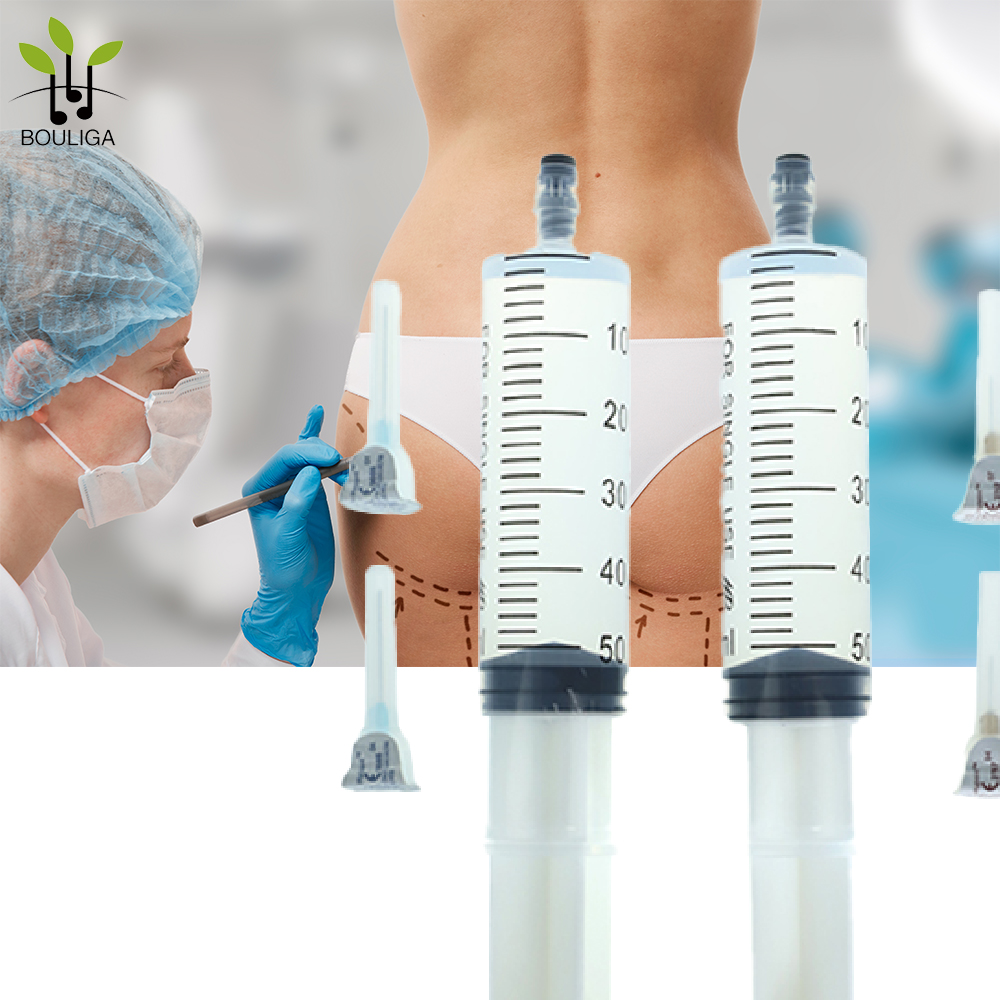
Non-animal stabilized hyaluronic acid binds water to create immediate, predictable volume. This hydrophilic property makes it highly effective for large-scale augmentation. The gel matrix expands slightly upon injection as it draws in surrounding interstitial fluid, providing instant projection. It mimics the natural extracellular matrix found in human skin, making it highly accepted by the body's immune system.
Manufacturers use BDDE (1,4-butanediol diglycidyl ether) to stabilize the HA chains. This cross-linking technology delays enzymatic degradation. Without BDDE, natural hyaluronidase in the body would break down the filler within days. The cross-linking process extends the lifespan of the filler in high-mobility areas. A specialized hyaluronic acid body filler utilizes a denser cross-linking matrix and a higher degree of modification (MoD) than facial products. This creates a stiffer gel capable of resisting the heavy mechanical loads of the torso and lower body.
The primary clinical advantage is complete reversibility. You can dissolve HA instantly if complications arise. It provides immediate results and boasts an established biocompatibility profile. These factors make it the gold standard for large-area contouring. If a patient experiences vascular compromise or simply dislikes the aesthetic outcome, flooding the area with recombinant hyaluronidase breaks the BDDE bonds, returning the tissue to its baseline state within 48 hours.
PLLA is a synthetic, biocompatible, and biodegradable polymer. It acts as a macrophage-stimulating agent to induce targeted neocollagenesis. The body responds to the PLLA microparticles by initiating a subclinical inflammatory response. Macrophages encapsulate the particles, which then signals fibroblasts to produce fresh Type I and Type III collagen fibers. This process thickens the dermis and subcutaneous tissue over several months.
This material is best suited for tissue thickening and cellulite reduction. It builds gradual volume rather than providing immediate projection. You use PLLA to improve skin quality, increase dermal thickness, and provide structural support over large surface areas. It works exceptionally well for correcting hip dips, smoothing gluteal irregularities, or treating severe skin laxity on the abdomen post-pregnancy.
PLLA requires significant trade-offs and strict adherence to reconstitution protocols. You must hydrate the PLLA powder with sterile water and lidocaine well in advance of the procedure—often 24 to 48 hours prior—to ensure the microparticles are fully suspended. Patients must undergo multiple sessions spaced 4 to 6 weeks apart to achieve desired results. The onset of volume is delayed by several weeks. Strict post-treatment massage protocols are mandatory. Patients must massage the area for five minutes, five times a day, for five days to prevent granuloma formation and ensure even particle distribution.
CaHA consists of synthetic calcium hydroxylapatite microspheres suspended in an aqueous carboxymethylcellulose (CMC) gel carrier. The gel provides immediate volume upon injection, giving the practitioner and patient an instant visual guide. As the body absorbs the CMC gel carrier over the first few months, the microspheres stimulate long-term collagen and elastin production. This dual-action mechanism offers both instant gratification and structural longevity.
Practitioners frequently use hyperdilution techniques for body applications. You alter the rheology of CaHA by mixing it with normal saline and lidocaine. Standard dilution ratios range from 1:1 to 1:4, depending on the thickness of the target tissue. This thins the product, allowing it to spread evenly over large body surface areas through a cannula. Hyperdilute CaHA effectively treats severe skin laxity on the abdomen, knees, upper arms, and décolletage. It acts more as a bio-stimulatory skin tightener than a traditional volumizer when used in this hyperdilute form.
The gluteal region presents unique biomechanical demands. Materials placed here must withstand constant compressive forces from sitting. They also endure extreme shear stress during walking, running, and exercise. Standard dermal formulations will flatten, migrate, or degrade rapidly under these conditions. You need high-viscosity, high-elasticity materials to maintain shape and projection against the heavy weight of the gluteal tissue.
Material selection is critical for safety and longevity. A specialized buttock filler provides the necessary structural integrity. Practitioners often prefer cross-linked hyaluronic acid for its predictable lift, immediate feedback, and safety profile. Alternatively, a high-volume PLLA protocol works well for patients prioritizing skin tightening and subtle reshaping over massive projection. PLLA is particularly effective for filling lateral gluteal depressions (hip dips) where the skin is tightly adhered to the underlying fascia.
Depth of injection dictates the safety of the procedure. You must place the material strictly in the subcutaneous fat layer, superficial to the gluteal muscle fascia. Sub-fascial or intramuscular placement dramatically increases the risk of severe vascular compromise. The inferior and superior gluteal veins run deep within the muscle. Intramuscular injections can lead to fatal macroscopic embolisms if the material enters these large vessels. Strict adherence to anatomical safety zones, often verified by real-time ultrasound guidance, prevents catastrophic outcomes.
Injecting materials into the breast tissue involves strict regulatory scrutiny. The CE mark status in Europe permits certain applications under tight guidelines, while FDA restrictions in the US heavily regulate these procedures. You must navigate these legal frameworks carefully, ensuring you operate within your local medical board's scope of practice. Patient safety, informed consent, and long-term monitoring remain the highest priorities.
Clinical applications are highly specific and limited. You should restrict use to minor asymmetry correction, cleavage enhancement, or filling small contour deformities. It is also useful for post-surgical contouring to smooth visible implant edges in patients with thin tissue coverage. A dedicated hyaluronic acid breast filler is not a replacement for primary surgical augmentation. Large-volume injections here increase complication risks significantly, including capsular contracture around the filler bolus or severe ptosis from the added weight.
Imaging interference is a major clinical concern. Filler materials can obscure mammography or ultrasound results during routine breast cancer screenings. Radiologists must know the exact location, depth, and type of material injected. HA can mimic complex cysts or fibroadenomas on imaging. Clear documentation in the patient's medical record and direct patient communication ensure accurate future medical screenings. We recommend patients undergo a baseline mammogram before any breast injectable procedure.
Different body areas require matching the material to the primary deficit. You must differentiate between treating skin laxity, which requires biostimulation, and treating true volume loss, which requires structural support. The hands, neck, knees, and calves all present distinct anatomical challenges.
Hands: Volume loss reveals underlying extensor tendons and dorsal veins. HA or CaHA injected into the dorsal lamina restores a youthful, plump appearance while hiding vascular structures.
Neck: Horizontal necklace lines and crepey skin respond well to hyperdilute CaHA or very light, flexible HA formulations injected subdermally.
Knees: Sagging skin above the patella requires intense collagen stimulation. Hyperdilute CaHA tightens this specific tissue effectively without adding unnecessary bulk that would impede joint movement.
Calves: Correcting asymmetry from muscle atrophy or adding bulk requires robust volumization. High G-prime HA placed deep in the subcutaneous tissue provides the necessary structural lift to mimic the gastrocnemius muscle.
Understanding rheology is essential for predictable outcomes. The elastic modulus, known as G prime (G'), determines a filler's firmness and its ability to recover its shape after being subjected to shear stress. A high G' means the material can lift heavy body tissue and resist deformation. Low G' products spread easily but offer zero structural support. Body augmentation demands exceptionally high G' values to fight gravity and tissue weight.
We also evaluate the viscous modulus (G'') and the complex viscosity. A filler must be cohesive enough to stay together as a single unit rather than fragmenting into the surrounding tissue. Particle size directly impacts longevity and integration. Body-specific HA fillers utilize much larger particle sizes (often exceeding 1000 microns) than facial products. These larger particles degrade slower because they present less surface area to endogenous hyaluronidase. They extend the degradation timeline to typically 12 to 24 months. The dense cross-linking network protects the material from rapid enzymatic breakdown, ensuring lasting results for the patient.
The hyaluronidase protocol is your primary safety net. You must know how to calculate the required units of hyaluronidase for dissolving large volumes. Standard facial protocols of 150 to 300 units are entirely insufficient for body complications. Vascular compromise in the gluteal region requires immediate, aggressive flooding of the area with 1000 to 3000 units of the enzyme, often delivered via cannula to ensure widespread dispersion. Aesthetic dissatisfaction also relies on this reversal agent. Having ample supply on hand is non-negotiable for high-volume HA treatments.
Managing biostimulator complications requires different clinical pathways. You cannot dissolve PLLA or CaHA. If nodules or granulomas form, you must use alternative treatments. Protocols include localized steroid injections (Kenalog) or 5-fluorouracil (5-FU) to break down the inflammatory tissue. You inject these directly into the nodule to halt the overactive immune response. In severe, unresponsive cases, surgical excision remains the final option. Prevention through proper depth, adequate hydration of the product, and rigorous post-procedure massage is paramount.
High-volume body contouring alters practice resource allocation significantly. You are managing massive quantities of product per session. A single gluteal augmentation may require 40 to 100 syringes of material, depending on the baseline anatomy and desired projection. This volume necessitates robust inventory management and secure, temperature-controlled storage solutions. Running out of product mid-procedure disrupts the clinical workflow, forces the patient to return for an incomplete treatment, and compromises the aesthetic result.
Multi-session treatments impact your operational schedule. Biostimulators require patients to return every few weeks. You must factor this chair time into your practice overhead. Dedicated follow-up appointments for massage checks, ultrasound evaluations, or top-ups consume clinical hours. Efficient scheduling ensures these high-volume cases do not bottleneck your daily operations or delay standard facial injectable appointments.
Patient selection mitigates implementation risks. Not every patient is a candidate for non-surgical augmentation. Those requiring massive projection or those with severe skin ptosis are better suited for surgical intervention. Setting realistic expectations prevents dissatisfaction. Clear communication regarding the longevity, required sessions, and maintenance protocols ensures a smooth clinical experience and protects your practice reputation. We always document the agreed-upon treatment plan and expected volume limits before touching a syringe.
Mastering modern body injectables requires a deep understanding of material science, rheology, and strict anatomical limits. Practitioners must prioritize safety and tissue suitability over simple volume requests. To implement these protocols effectively and protect your patients, follow these actionable steps:
Audit your current inventory to ensure you stock high G-prime materials specifically formulated for body tissue, separating them clearly from facial products.
Establish a strict, written high-dose hyaluronidase protocol for large-volume vascular emergencies before performing any body injections.
Implement mandatory ultrasound mapping for high-risk areas to verify subcutaneous depth and definitively avoid intramuscular placement.
Standardize your hyperdilution mixing ratios and PLLA hydration timelines to ensure consistent results across different practitioners in your clinic.
A: Body HA fillers feature a significantly higher G-prime and larger particle size. This dense cross-linking allows them to lift heavier tissue and resist the intense mechanical stress found in areas like the glutes. They also last much longer than softer facial formulations.
A: No. Biostimulators like PLLA and CaHA cannot be dissolved with hyaluronidase. If nodules form or the aesthetic result is poor, practitioners must use steroid injections, 5-FU, or surgical excision to manage the complications.
A: Gluteal fillers must be injected strictly into the subcutaneous fat layer. Injecting into or below the muscle dramatically increases the risk of severe vascular compromise, including fatal fat or filler embolisms.
A: Hyperdilution mixes CaHA with saline and lidocaine to thin the gel. This allows the material to spread evenly over large areas like the abdomen or knees, focusing on collagen stimulation and skin tightening rather than immediate volumization.
A: Yes, particularly in the breast. Hyaluronic acid can mimic cysts or obscure tissue on mammograms and ultrasounds. Patients must inform their radiologists about the presence and exact location of any injected materials before screenings.
A: Due to their large particle size and robust cross-linking, HA body fillers generally last between 12 to 24 months. Longevity depends on the patient's metabolism, the specific anatomical area treated, and the volume injected.
