

Views: 0 Author: Site Editor Publish Time: 2026-08-26 Origin: Site


The aesthetic market currently overflows with flashy marketing claims and celebrity endorsements. This constant noise makes it incredibly difficult for medical practitioners and procurement teams to select optimal products based purely on brand names. Selecting the right injectable requires looking past the glossy packaging. You must evaluate objective rheological properties instead. Furthermore, you need to verify manufacturing safety standards and secure reliable supply chains. These crucial steps ensure predictable clinical outcomes and guarantee absolute patient safety.
This comprehensive guide breaks down the core technical specifications you need to evaluate. We will show you exactly how to confidently shortlist high-quality injectables for your clinical practice. By understanding the underlying physics and chemistry of these gels, you can elevate your aesthetic results and minimize adverse reactions.
A filler’s physical behavior in human tissue is dictated by its rheology (G’ and G”), not its marketing label.
Understanding the structural differences between monophasic and biphasic gels is critical for matching products to specific facial indications.
Residual cross-linking agents (like BDDE) and endotoxin levels are non-negotiable safety metrics when auditing any formulation.
Partnering with a fully vetted manufacturer involves assessing batch consistency, regulatory compliance, and cold-chain logistics, not just unit cost.
Let us define the fundamental science behind injectable gels. When analyzing dermal fillers specifications, rheology stands as your most critical evaluation metric. Rheology studies how materials flow and deform under physical stress. For clinicians, it dictates exactly how a gel will behave once injected into human tissue.
Evaluating Elasticity (G’ - G Prime): This metric defines how a gel resists deformation. Think of it as the foundational firmness of the product. High G’ fillers maintain their shape under the pressure of overlying facial muscles. Clinicians need these firmer gels for reliable structural lifting. You will use them primarily along the jawline, chin, and zygoma. Conversely, low G’ fillers are soft, yielding, and flexible. They are strictly required for highly dynamic areas like the lips or tear troughs, where you want seamless, undetectable movement.
Understanding Viscosity (G” - G Double Prime): Viscosity measures the gel’s inability to flow, often perceived as its thickness. This directly impacts the extrusion force required to push the product through a fine needle or microcannula. A well-balanced G” ensures a smooth, predictable injection experience. It gives the injector significantly better mechanical control during delicate facial contouring procedures.
Cohesivity and Tissue Integration: Cohesivity refers to how well the gel holds itself together under internal and external mechanical stress. High cohesivity prevents the product from splitting apart or migrating away from the targeted injection site. It ensures the gel moves naturally with facial expressions rather than clumping into isolated, palpable pockets beneath the skin.
Implementation Risk: You face significant aesthetic risks if you fail to match rheological specs to the correct anatomical layer. Placing a high G’ product too superficially often results in visible, palpable nodules. Injecting a low G’ product over the periosteum provides zero structural lift. It simply spreads out, yielding poor aesthetic outcomes and wasting valuable product.
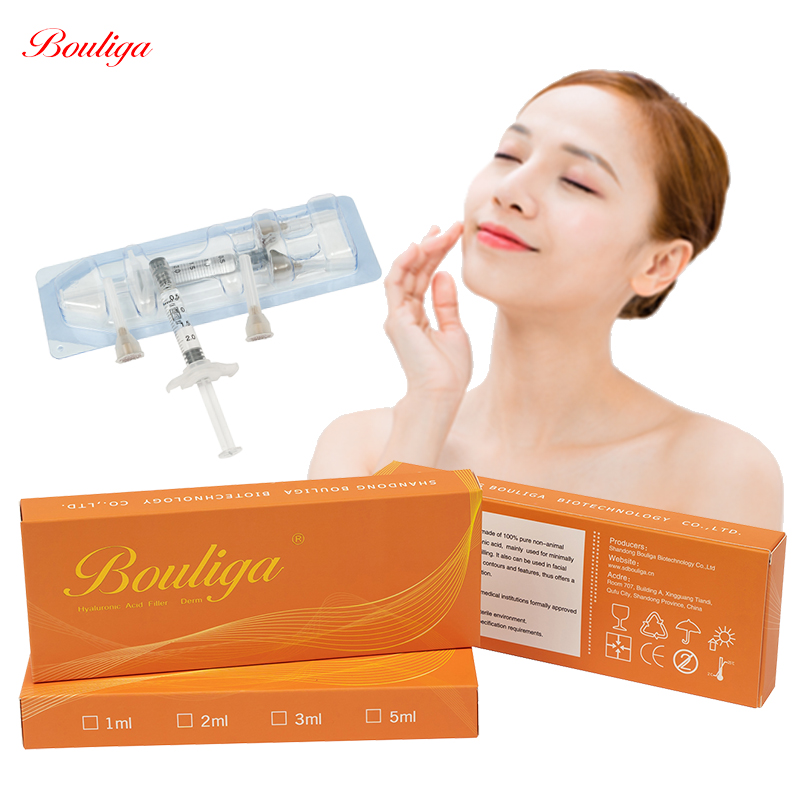
The manufacturing phase determines the exact physical structure of the hyaluronic acid gel. When you evaluate different formulations, you will encounter two primary structural categories. Understanding these distinct categories helps you curate a highly versatile clinic inventory.
Monophasic Formulations: A monophasic gel features a homogeneous, smooth structure. Manufacturers create this through a single-phase cross-linking process. The resulting gel feels like a cohesive, uniform syrup. In clinical practice, monophasic formulations offer notably easier extrusion. They integrate smoothly into superficial tissue layers. Patients typically experience a much lower risk of severe initial swelling. You will find them highly effective for filling fine lines and creating soft, natural lip enhancements.
Biphasic Formulations: A biphasic gel features a distinctly particulate structure. It contains highly cross-linked hyaluronic acid particles suspended within non-cross-linked, free hyaluronic acid. Think of it as small gelatin spheres floating in a lubricating fluid medium. Clinically, biphasic gels deliver a much higher volumizing capacity. They provide longer-lasting structural support against gravity. You should reserve these formulations for deep periosteal placement, such as robust cheek augmentation or precise chin projection.
Evaluation Framework: How do you determine the right structural mix for your practice? A comprehensive clinic must cover the full spectrum of patient indications. Therefore, stocking a mixed portfolio is absolutely essential. For instance, incorporating specific bouliga monophasic biphasic hyaluronic acid dermal formulations allows you to tailor treatments accurately. Follow this numbered framework to guide your inventory choices:
Assess your primary patient demographics and list your most frequently requested procedures.
Allocate approximately 40% of your inventory to smooth, monophasic gels for superficial corrections.
Allocate approximately 60% of your inventory to robust, biphasic gels for deep volume restoration.
Continuously monitor clinical outcomes over six months to adjust this ratio based on actual usage.
Excellent aesthetic results depend entirely on precise anatomical mapping. You must align the technical specifications of your dermal fillers with highly specific facial goals. Mismatched products cause the vast majority of adverse cosmetic outcomes seen in the industry today.
Superficial Dermis & Fine Lines: Treating the superficial dermis requires absolute delicacy. You need a gel with low G’, low cohesivity, and high tissue spreadability. Monophasic gels excel in this specific environment. Placing a stiff, highly cross-linked product too close to the skin surface often causes the dreaded Tyndall effect. This creates an unnatural bluish discoloration as light scatters through the inappropriately placed gel.
Mid-Face Volumization & Dynamic Areas: The mid-face includes the cheeks and the highly mobile nasolabial folds. These zones experience constant, intense muscle movement during speaking and smiling. They require a moderate G’ and high cohesivity. The high cohesivity allows the gel to stretch and accommodate natural movement without permanent displacement or unnatural bunching.
Deep Structural Lifting: Creating artificial bone structure requires maximum physical support. You will target the deep fat pads or the supraperiosteal plane directly above the bone. This requires high G’ and high viscosity formulations. Clinicians frequently rely on biphasic or heavily cross-linked monophasic products to mimic rigid bone. They provide the necessary projection for sharp jawline contouring and defined chin augmentation.
Evidence-Oriented Decision: We highly recommend mapping formulation types directly to anatomical zones. Evidence consistently shows this minimizes adverse events and maximizes product longevity in the tissue. Below is a practical reference chart to help you structure your clinical mapping.
Clinical Anatomical Mapping Guide
Anatomical Zone | Required Rheology (G') | Recommended Gel Structure | Primary Clinical Goal |
|---|---|---|---|
Lips & Tear Troughs | Low G' | Monophasic | Soft integration, high flexibility |
Nasolabial Folds | Moderate G' | Monophasic or Mild Biphasic | Accommodate movement, smooth lines |
Cheeks & Zygoma | High G' | Biphasic | Volume restoration, anti-gravity lift |
Jawline & Chin | Very High G' | Biphasic | Bone mimicry, sharp contouring |
Efficacy means absolutely nothing without a strict, proven safety profile. When auditing any injectable, you must look well beyond the immediate physical results. True quality control happens at the microscopic level during the complex purification process.
Cross-Linking Agent Safety (BDDE limits): Natural hyaluronic acid degrades in the human body within a few days. Manufacturers use 1,4-butanediol diglycidyl ether (BDDE) to cross-link the polymer chains. This vital process creates the longevity patients expect. However, unreacted BDDE is inherently toxic. We must emphasize the strict requirement for trace unreacted BDDE levels to remain below proven safe thresholds. Industry standards mandate these trace levels stay strictly under 2 parts per million (ppm). Top-tier manufacturers consistently achieve trace levels below 1 ppm.
Endotoxin and Protein Loads: Most modern hyaluronic acid derives from bacterial fermentation processes. This biological origin requires incredibly stringent purification protocols. High endotoxin levels correlate directly with delayed-onset inflammatory nodules and severe hypersensitivity reactions. Simply put, the lower the endotoxin count, the safer the product is for your patients.
Authoritative Benchmarks: Never rely solely on shiny manufacturer sell-sheets or marketing claims. You must verify these critical specifications against authoritative benchmarks. Look for strict alignment with ISO standards, FDA requirements, or CE mark technical files.
To maintain peak safety, implement these clinical best practices:
Always request comprehensive third-party lab testing results before stocking a new brand.
Reject any products that fail to clearly list their precise residual BDDE parts per million.
Verify the endotoxin units (EU) per syringe fall well below regulatory maximums.
Ensure protein load is minimal to prevent long-term granuloma formation in the tissue.
Even the best formulation loses its clinical value if mishandled before reaching your clinic. Partnering with a reliable dermal fillers supplier requires rigorous due diligence. You are establishing a vital medical partnership, not just buying a retail commodity.
Batch-to-Batch Consistency: The primary indicator of a trustworthy partner is exceptionally tight quality control. Rheological parameters should never vary significantly between manufacturing lots. If one batch feels exceptionally stiff while the next feels watery, the manufacturing process is fatally flawed. Consistent extrusion forces guarantee predictable treatments for your patients.
Supply Chain & Storage: Assess the distributor's temperature-controlled logistics carefully. Improper storage severely degrades hyaluronic acid chains. Extreme heat during transit or freezing temperatures in a warehouse will permanently alter the specified G’ and G”. The product will fail to perform as designed once it finally reaches your clinic. Secure cold-chain logistics are absolutely non-negotiable.
Documentation Transparency: A trustworthy partner operates with complete, unhesitating transparency. They will readily provide Certificates of Analysis (CoA) for every single batch you purchase. They should also supply clinical trial data abstracts and detailed material safety data sheets (MSDS) upon request. If a vendor hesitates or refuses to share this technical data, consider it a massive red flag and look elsewhere.
Shortlisting Logic: Avoid vendors competing solely on rock-bottom unit costs. Bargain-basement prices almost always signal compromised purification processes or broken supply chains. Build your shortlist based strictly on verified purity metrics, robust rheological data, and highly transparent documentation.
The aesthetic industry requires precision, deep product knowledge, and an unwavering commitment to patient safety. Selecting the ideal injectables demands looking far past brand prestige and aggressive marketing. You must analyze objective physical properties, including precise rheological data, specific manufacturing phases, and stringent purification metrics.
Take these actionable next steps to optimize your clinical practice today:
Audit your current clinic inventory against specific G’ and G” requirements to identify potential clinical gaps.
Request technical dossiers from your current distributors to verify their endotoxin and BDDE compliance.
Reorganize your stockroom by matching specific gel formulations directly to their ideal facial zones.
Establish strict, standardized documentation protocols for every new product you introduce to your patient base.
A: Monophasic fillers are a smooth, homogeneous gel, ideal for even spread. Biphasic fillers contain varied particle sizes suspended in a gel, ideal for deep structural volumizing.
A: It measures the filler's firmness. High G' is needed for lifting tissue (jaw/cheeks), while low G' is needed for soft tissue (lips) to avoid a stiff, unnatural feel.
A: Request transparent Certificates of Analysis verifying endotoxin levels, trace BDDE limits, and consistent rheological testing data across multiple manufacturing batches.
A: No. While cross-linking extends longevity, excessive cross-linking without proper purification can increase the risk of delayed inflammatory responses. Balance is key.
