

Views: 0 Author: Site Editor Publish Time: 2026-09-22 Origin: Site


Clinics and medical distributors face relentless margin compression today. Relying entirely on major branded orthobiologics often squeezes your profitability. You lose control over local supply chains and miss critical opportunities to build lasting brand equity. Outsourcing your reputation to third-party manufacturers limits long-term growth. It restricts your ability to scale operations effectively.
Transitioning to a private label model offers a powerful strategic shift. You reclaim control over product economics without compromising patient outcomes. This shift allows you to curate specialized formulations tailored exactly to your patient demographics. Patients begin associating profound pain relief directly with your clinic's proprietary name.
This guide explores when private labeling becomes a smart, profitable maneuver. You will learn how to build deep supply chain resilience. We will provide a concrete framework to assess the technical realities of this transition. You will discover how to evaluate essential formulations, mitigate regulatory risks, and elevate your entire clinical practice.
Shifting away from established third-party brands is a major operational decision. You must evaluate multiple business indicators before making the leap. Clinical volume often dictates the timing. You need enough consistent patient demand to justify the leap.
Private labeling requires upfront capital. Manufacturers mandate Minimum Order Quantities (MOQs) to cover custom packaging and sterilization runs. You must analyze your monthly injection volume. If your clinic consistently uses hundreds of units monthly, the cost-savings of private labeling usually outweigh the overhead of supplier management.
Major brands embed massive marketing costs into their unit prices. You absorb these costs every time you order. A direct manufacturing relationship strips away these inflated premiums. Clinics often see substantial unit margin improvements once they clear their first MOQ hurdle. The key is ensuring your volume guarantees a swift return on investment.
White-labeling builds intrinsic practice value over time. It shifts the power dynamic in your favor. When a patient receives a major brand injection, they credit the manufacturer for their relief. When they receive your custom-branded solution, they credit you.
Patients associate the positive clinical outcome directly with your clinic. This builds immense loyalty. They cannot go to a competing practice down the street to get "your" proprietary formula. It transforms a standard commodity into an exclusive medical service. This exclusivity drives patient retention and increases lifetime value.
Relying on massive global brands exposes you to sudden shortages. Backorders disrupt patient care. They force you to reschedule treatments and risk losing patients to competitors. Establishing direct relationships with manufacturers mitigates these critical backorder risks.
You gain priority access to production lines. You can forecast your inventory needs directly with the facility. This tight integration ensures your shelves remain stocked even when global supply chains stumble. It grants you ultimate control over your clinical schedule.
Your first private-label order sets the foundation for your brand. You should target high-demand indications initially. Focus on the most common osteoarthritis interventions. You want a product known for predictable, reliable clinical outcomes.
Starting with pure non crosslinked hyaluronic acid knee formulations is typically the safest entry point. Clinicians favor this formulation because it carries a remarkably low risk profile. It causes far fewer adverse immunological reactions compared to chemically crosslinked variants.
Chemically crosslinked gels alter the natural molecular structure to extend degradation time. However, this alteration can trigger localized swelling or pseudosepsis. A pure, non-crosslinked approach avoids these foreign-body reactions. It matches the natural synovial fluid more closely.
This formulation excels at immediate joint lubrication. It offers highly predictable short-to-medium-term pain management. Clinicians can roll it out confidently. They know exactly how the patient will respond. This predictability builds trust in your new private brand instantly.
Once your core hyaluronic acid line succeeds, you can expand. Many practices add customized PRP (Platelet-Rich Plasma) prep kits. Others explore specialized corticosteroid formulations. These secondary expansions allow you to offer a complete, branded orthobiologic portfolio.
You should introduce these add-ons sequentially. Master the procurement and quality control of your primary hyaluronic acid first. Then scale your catalog to match your expanding clinical capabilities.
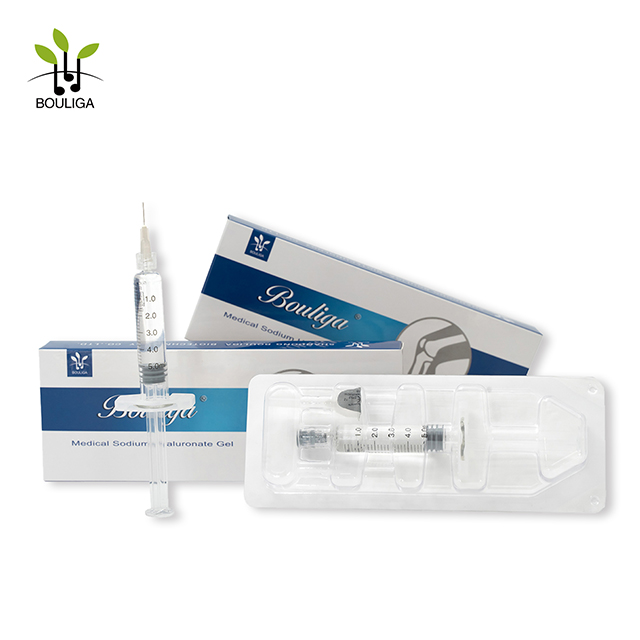
Slapping your logo on a box is the easy part. Ensuring the liquid inside meets rigorous medical standards is the actual challenge. You must apply a strict technical lens during procurement. Properly auditing joint injections specifications is completely non-negotiable for mitigating clinical risk.
Molecular weight directly impacts clinical efficacy. It determines the duration of relief. High molecular weight hyaluronic acid mimics natural joint fluid optimally. It provides superior mechanical cushioning. You must verify the exact Daltons (Da) metric with the manufacturer.
Viscosity affects the mechanical flow through the needle. If the gel is too thick, clinicians will struggle to inject it through standard gauges. If it is too thin, it clears from the joint space too rapidly. You need the precise rheological data sheet to confirm ideal extrudability.
The source of your active ingredients dictates both safety and scalability. There are two primary sources: bio-fermentation and animal-derived (avian).
| Source Type | Production Method | Allergenic Risk | Scalability |
|---|---|---|---|
| Bio-fermentation | Bacterial synthesis (Streptococcus) | Extremely Low | High / Highly Consistent |
| Animal-derived | Extracted from rooster combs | Moderate (Avian allergies) | Limited / Batch Variable |
You should prioritize bio-fermented sources. They eliminate avian allergy risks. They also ensure better batch-to-batch consistency. This consistency is crucial when scaling your private label brand.
Patient safety hinges on strict sterility. You must evaluate endotoxin limits meticulously. High endotoxin levels trigger severe post-injection flare-ups. These reactions can mimic septic arthritis. Your manufacturer must provide certificate of analysis (CoA) documents proving endotoxin levels fall well below regulatory limits.
Packaging protects the integrity of the sterile product. You must audit pre-filled syringe durability. Check the graduation accuracy on the syringe barrel. Ensure the blister pack integrity can withstand rough shipping conditions. A compromised blister pack renders the entire syringe useless.
Finding a product is only half the battle. You must find a reliable manufacturing partner. You must shift your focus from product evaluation to vendor due diligence. Differentiating a true medical manufacturer from a generic broker saves you immense legal and financial headaches.
You cannot compromise on regulatory infrastructure. A reliable joint injections supplier must hold an active ISO 13485 certification. This certification proves they maintain a dedicated Quality Management System (QMS) for medical devices. You should request this certificate immediately during initial talks.
Depending on your market, they also need CE marking (MDR compliance) or FDA facility registration. Do not accept verbal assurances. Require transparent access to clinical trial data. Ask for their latest biocompatibility reports. Review their batch-testing records to ensure historical compliance. True manufacturers share this data willingly.
You must align their fulfillment capabilities with your operational realities. Assess their MOQs against the product shelf-life. You cannot order 5,000 units if they expire in twelve months and your clinic only uses 100 a month. Ensure inventory does not expire before use.
Evaluate their lead times carefully. Ask how long it takes to process custom packaging designs. Assess their ongoing QA responsiveness. If a batch arrives damaged, how quickly do they issue replacements? Establish these service-level agreements before signing any manufacturing contract.
Executing the transition requires careful internal and external management. The rollout involves more than just unboxing new inventory. You must navigate skepticism, communication hurdles, and strict legal boundaries.
You must address clinician skepticism proactively. Doctors often resist switching from legacy brands. They trust the names they learned in residency. You win them over using hard specification data.
Present the technical data sheets side-by-side. Show them the molecular weight parity. Highlight the superior endotoxin limits of your new joint injections. When doctors see that the clinical mechanics are identical or superior, their resistance fades. Host internal training sessions to ensure everyone understands the clinical equivalence.
Scripting the transition is vital. You cannot present the new product as a cheap generic alternative. You must position your clinic-branded injection as a premium, curated solution.
Here are effective scripting steps for your staff:
This messaging transforms a potentially concerning switch into a massive value-add for the patient.
Putting your brand on a Class III medical device carries legal weight. You must clearly define the legal assumptions of becoming the "legal manufacturer" or distributor of record. If you operate as an Own Brand Labeler (OBL), you assume significant regulatory responsibilities in many jurisdictions.
You must establish who handles post-market surveillance. Detail exactly how adverse events are reported. Ensure your contract delineates indemnity clauses clearly. Consult with a medical device regulatory attorney to draft a robust quality agreement with your manufacturer.
Private-labeling your clinical inventory represents a highly profitable strategic move. It builds brand equity, eliminates middleman markups, and insulates you from global supply chain shocks. However, this strategy only succeeds when backed by rigorous specification audits and relentless supplier vetting.
You must take measured, calculated steps. Begin your transition by requesting physical product samples. Demand comprehensive technical data sheets (TDS) and material safety data sheets (MSDS) from two or three shortlisted manufacturers. Compare their documentation thoroughly before making any financial commitments.
Do not rush the due diligence process. A secure, compliant supply chain is the foundation of a lasting clinical brand. Contact your procurement specialists today to start mapping your clinical volumes, or download a detailed supplier audit checklist to begin evaluating potential manufacturing partners.
A: MOQs vary significantly depending on the manufacturer and the complexity of the formulation. Typically, orders start between 1,000 to 5,000 units. This volume is necessary to justify the high overhead costs associated with custom packaging, localized printing, and dedicated sterilization runs in a certified facility.
A: Yes, it is generally much better for entry-level private labeling. Pure non-crosslinked hyaluronic acid has a remarkably lower risk profile for inflammatory site reactions. It avoids the foreign-body responses sometimes triggered by chemical crosslinkers, making initial patient and clinician adoption much smoother.
A: It depends on your contractual arrangement. With an OEM setup, the supplier often retains the primary CE/FDA mark. However, if you act as an Own Brand Labeler (OBL), regulatory responsibilities shift significantly to you. You must clarify jurisdiction-specific liabilities and draft a strict quality agreement.
