

Views: 0 Author: Site Editor Publish Time: 2026-08-21 Origin: Site


Sodium hyaluronate and hyaluronic acid are often used interchangeably, but there are key differences between the two. While both are celebrated for their ability to hydrate and rejuvenate skin, understanding the technical distinctions can significantly impact product selection and formulation strategies. This article breaks down the differences between sodium hyaluronate and hyaluronic acid, clarifying why sodium hyaluronate is often preferred in modern skincare products and how these two ingredients compare in performance, stability, and application.
Hyaluronic acid (HA) is a naturally occurring substance found in the human body. It plays an essential role in maintaining the skin's moisture balance, keeping joints lubricated, and promoting cellular health. Known for its impressive ability to retain water—up to 1,000 times its weight in moisture—hyaluronic acid has become a cornerstone ingredient in many skincare and medical treatments.
Basic Chemistry & Molecular Weight
Hyaluronic acid is a glycosaminoglycan, a type of molecule composed of long chains of sugar molecules. These chains are highly hydrophilic, meaning they attract and hold water molecules, making hyaluronic acid a powerful humectant. The molecular weight of hyaluronic acid varies depending on its form and production method, ranging from high molecular weight (HMW) to low molecular weight (LMW). Higher molecular weight HA tends to stay on the skin’s surface, providing a layer of moisture, while lower molecular weight HA penetrates deeper, offering more intensive hydration.
Use in Cosmetics / Medical Fields
In the cosmetic industry, hyaluronic acid is frequently used in serums, moisturizers, and face masks for its ability to hydrate, plump, and smooth the skin. It also plays a significant role in medical applications, including joint treatments, wound healing, and eye surgeries. HA injections are commonly used in dermal fillers to reduce the appearance of fine lines and wrinkles, thanks to its moisture-retention properties.
Sodium hyaluronate is the sodium salt of hyaluronic acid. It is the form of HA that is most commonly used in skincare products due to its improved stability and solubility in water. While both sodium hyaluronate and hyaluronic acid share similar properties, sodium hyaluronate is more easily absorbed by the skin because it is more soluble and penetrates deeper layers.
Salt Form of HA, Different Solubility & Penetration
When hyaluronic acid is neutralized with sodium hydroxide, it forms sodium hyaluronate. This change significantly increases the solubility of the compound in water, making it more suitable for use in aqueous-based formulations like lotions and serums. The sodium salt form also enhances skin penetration, allowing it to work deeper within the skin layers compared to its acid form. This makes sodium hyaluronate particularly effective for delivering long-lasting hydration and improving skin texture.
Why It’s Popular in Formulations
Sodium hyaluronate’s ability to dissolve easily in water-based products makes it a preferred choice for many formulators. It provides superior hydration, helps improve elasticity, and reduces the appearance of fine lines. Because it is more stable than hyaluronic acid, sodium hyaluronate has a longer shelf life and retains its efficacy in skincare formulations for a longer period.
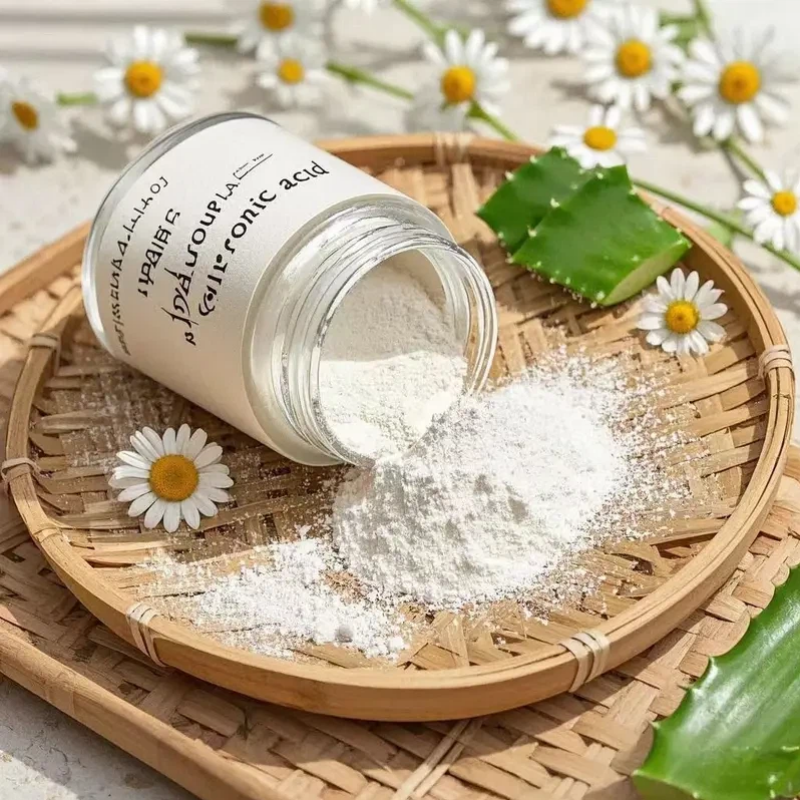
The differences in performance and formulation between sodium hyaluronate and hyaluronic acid largely stem from their molecular structure, solubility, and skin penetration abilities.
Molecular Weight & Skin Penetration Differences
As mentioned, the molecular weight of HA varies, and it significantly affects how the ingredient performs. Hyaluronic acid with a higher molecular weight creates a film on the skin’s surface, helping to retain moisture and prevent water loss. This can lead to a temporary plumping effect, but the hydration is not as deep. On the other hand, sodium hyaluronate, due to its smaller size and better solubility, penetrates deeper into the skin, providing longer-lasting hydration and improving elasticity at a deeper level.
Stability, Solubility, Formulation Flexibility
Sodium hyaluronate is more stable than hyaluronic acid, which means it can be incorporated into a wider range of skincare formulations without compromising its efficacy. Hyaluronic acid, being less stable in certain conditions, may degrade faster, especially in formulations exposed to heat, light, or air. Sodium hyaluronate’s stability and solubility in water make it the preferred choice for many high-performance skincare products, especially those that require water-based compositions.
The increased formulation flexibility of sodium hyaluronate also allows formulators to adjust the molecular weight of the compound to suit the specific needs of their products. Whether aiming for surface-level hydration or deep tissue hydration, sodium hyaluronate can be fine-tuned to deliver the best results.
Choosing between hyaluronic acid and sodium hyaluronate depends on the goals of the formulation and the desired outcome. Understanding the specific benefits of sodium hyaluronate allows for better product development and can provide a competitive edge in the crowded skincare market.
When You Might Use HA vs Sodium Hyaluronate
If the goal is to create a product that offers deep skin penetration and long-lasting hydration, sodium hyaluronate is the clear choice. Its ability to travel deeper into the skin layers and maintain moisture over time makes it ideal for anti-aging formulations. On the other hand, if the goal is to deliver more immediate surface-level hydration and create a protective moisture barrier, hyaluronic acid may be more suitable. However, sodium hyaluronate is more versatile overall and can serve a broader range of product types.
How Our Product Leverages the Benefits of Sodium Hyaluronate for Your Brand
At Shandong Bouliga Biotechnology Co., LTD., we leverage the power of sodium hyaluronate to create products that meet the highest standards of hydration and skin care. Our sodium hyaluronate is produced through advanced microbial fermentation, ensuring both purity and high performance. By using sodium hyaluronate, our clients can offer products that provide effective hydration and deliver superior anti-aging results.
Explaining the difference between sodium hyaluronate and hyaluronic acid to consumers can help clarify the value of products that use sodium hyaluronate. Simplified, clear language that focuses on the practical benefits can make the difference more understandable for a broad audience.
Simplified Language: “Deeper Penetration”, “Better Stability”
When marketing products, brands can highlight the key benefits of sodium hyaluronate over hyaluronic acid. For instance, you might say that sodium hyaluronate “penetrates deeper into the skin for longer-lasting hydration” or “is more stable and effective in water-based formulations.” These simplified messages make it easier for consumers to understand why sodium hyaluronate may be a better choice for their skincare needs.
Marketing Transparency Without Jargon
While it’s important to communicate the technical benefits of sodium hyaluronate, it’s equally important to do so without overwhelming the consumer with scientific jargon. Clear and concise messaging that explains why the ingredient is beneficial to the skin will resonate better with consumers and help build trust in the product.
Understanding the differences between sodium hyaluronate and hyaluronic acid can significantly impact both the formulation and marketing of skincare products. Sodium hyaluronate offers superior performance in terms of penetration, stability, and hydration. Its versatility and effectiveness make it the ingredient of choice for those looking to provide long-lasting hydration and anti-aging benefits. Choosing the right ingredient for your formulation can differentiate your product in the marketplace, improve customer trust, and lead to more successful products. If you’re looking for professional-grade sodium hyaluronate for your skincare formulations, contact us at Shandong Bouliga Biotechnology Co., LTD. to learn more about how our products can benefit your brand.
1. What is the main difference between hyaluronic acid and sodium hyaluronate?
The main difference is that sodium hyaluronate is the salt form of hyaluronic acid. It is more soluble in water, has better skin penetration, and is more stable in formulations.
2. Why is sodium hyaluronate preferred in skincare formulations?
Sodium hyaluronate is preferred because it is more stable, penetrates deeper into the skin, and can deliver longer-lasting hydration compared to hyaluronic acid.
3. Can sodium hyaluronate be used for all skin types?
Yes, sodium hyaluronate is suitable for all skin types. It is gentle and provides deep hydration without causing irritation, making it ideal for sensitive skin.
4. How do I know which form of hyaluronic acid to use in my skincare product?
The choice between hyaluronic acid and sodium hyaluronate depends on the desired effect. Sodium hyaluronate is best for deep hydration and long-lasting effects, while hyaluronic acid is ideal for creating a surface-level barrier to lock in moisture.
