

Views: 0 Author: Site Editor Publish Time: 2026-10-08 Origin: Site


Aesthetic medicine has rapidly evolved over the past decade. Clinicians are shifting away from simple brand-based purchasing toward evidence-based product selection. Today, understanding physical gel properties completely dictates clinical success. You can no longer treat HA filler rheology as an optional subject in your practice. Grasping these complex dynamics directly impacts patient safety, outcome predictability, and your clinic’s overall reputation. Patients expect seamless, natural results that adapt to their unique facial anatomy. Choosing the wrong gel for a specific tissue plane leads to unnatural movement and potential long-term complications. This article provides a comprehensive, actionable technical evaluation framework. We will help you critically assess manufacturer claims before making major procurement decisions. You will learn how to select the correct cross-linked HA dermal filler for specific tissue layers and aesthetic indications, ensuring optimal results every single time.
Unpredictable filler behavior carries a heavy financial cost for modern aesthetic clinics. Product migration, delayed nodules, and high touch-up rates actively erode your profitability. These issues also damage patient retention over time. Patients expect flawless, natural-looking results from their investments. When gels fail to integrate properly, you spend unpaid time fixing adverse events. Managing complications directly drains clinical resources and blocks revenue-generating appointments.
We define successful product integration by three primary criteria. First, the gel must deliver predictable tissue projection upon injection. Second, it must allow natural facial movement during dynamic expressions like smiling or talking. Third, it must maintain a long-term profile of minimal adverse events. Achieving these criteria requires more than just excellent injection technique. It requires a fundamental understanding of physical product characteristics.
Understanding gel dynamics provides a vital compliance and safety lens. You can easily avoid off-label complications by matching physical properties to correct anatomical planes. For example, placing a highly cohesive, stiff product too superficially causes visible lumps. It can also trigger the Tyndall effect or chronic inflammation. Providers who master these scientific principles protect their patients. They also build highly resilient, reputable aesthetic practices.
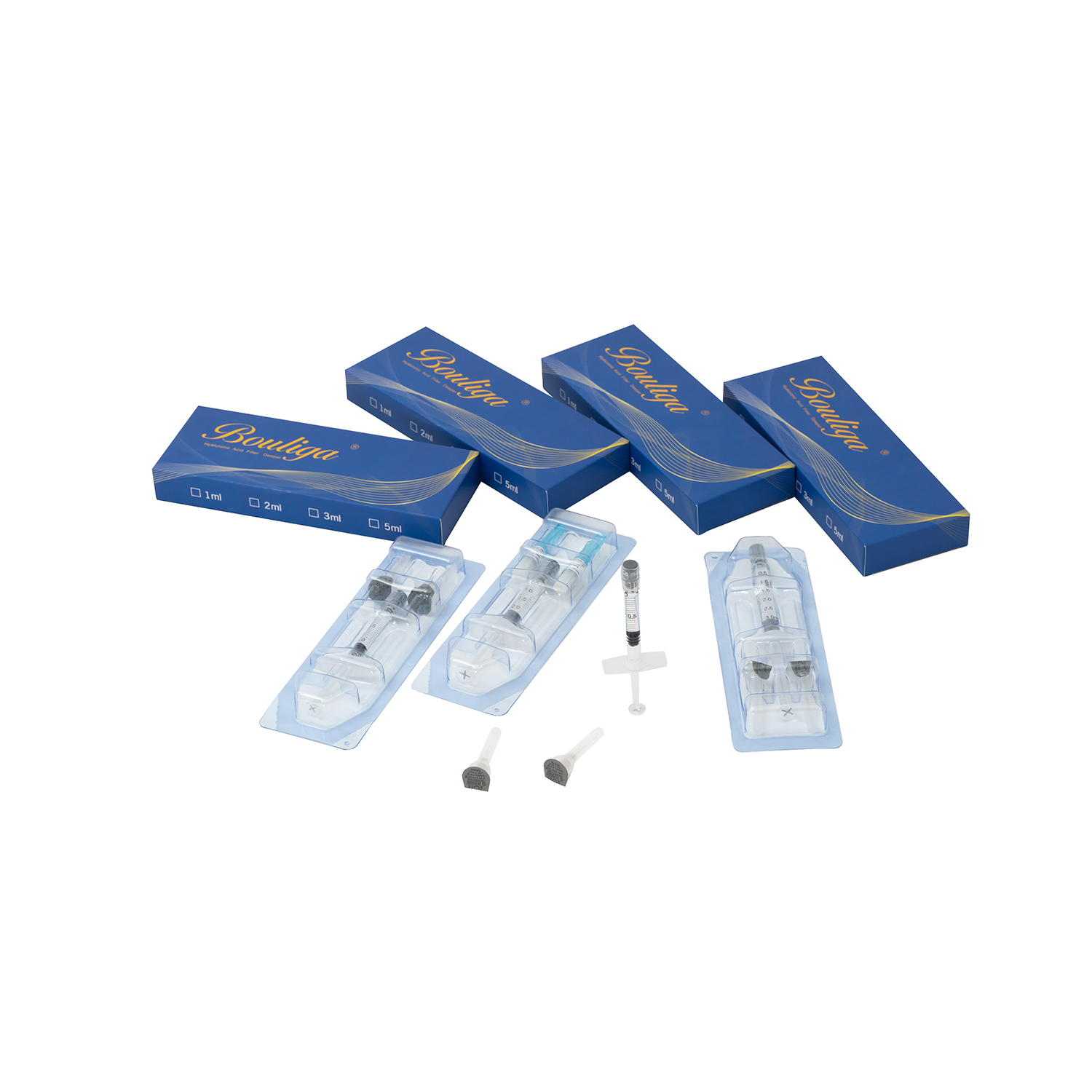
Baseline concentration and polymer chain length establish the initial structural matrix of any injectable gel. High molecular weight chains create a robust, deeply entangled network. Manufacturers carefully balance this baseline concentration to achieve specific clinical goals. A higher starting concentration generally yields a much firmer final product. However, concentration alone does not determine the gel's ultimate behavior.
Cross-linking agents like BDDE lock these individual chains together. This chemical process fundamentally transforms liquid hyaluronic acid into a durable, implantable gel. The degree of modification (MoD) measures how many cross-linkers successfully bind to the polymer chains. High cross-linking efficiency allows the product to resist rapid enzymatic degradation. It also strictly determines the overall stiffness of the resulting matrix. Unbound or suspended cross-linkers offer no structural benefit and must be purified out.
Hydration dynamics play a major role in final tissue expansion. The cross-linking process actively limits the natural water-binding capacity of hyaluronic acid molecules. This restriction dictates the swelling factor post-injection. Highly modified gels typically take up less water after placement. Recognizing this factor helps you predict final in-vivo volume accurately. You must account for this osmotic pull during the first four weeks of integration.
Clinicians must decipher specific metrics on a product's technical sheet. These numbers explain exactly how the gel will behave under physical stress in human tissue. You cannot rely on marketing brochures alone to make clinical decisions.
The elastic modulus (G’) measures the ability to resist physical deformation. It represents the structural firmness and lifting capacity of the gel. High G’ products excel at pushing heavy tissues upward. They provide solid, reliable structural support against gravity. You need these products to mimic bone structure in the lower face.
The viscous modulus (G’’) represents the gel's fluidity and spreadability. It measures the ability to flow into surrounding dermal tissue spaces. A higher G’’ allows the product to move smoothly alongside natural facial expressions. This fluidity prevents unnatural stiffness around the mouth and eyes.
Tan Delta (Tan δ) calculates the exact mathematical ratio of G’’ to G’. This ratio serves as the ultimate indicator of gel behavior. A low Tan δ means the product behaves primarily like a solid gel. A high Tan δ indicates a highly fluid, spreading gel. Understanding this ratio is non-negotiable for advanced practitioners.
Cohesivity measures macromolecular affinity within the gel structure. Do not confuse this metric with firmness. Cohesivity dictates the gel’s ability to stick to itself under sheer stress. Highly cohesive gels resist breaking apart upon muscle contraction. This stickiness directly prevents unwanted migration over time.
Table: Rheological Parameter Quick Reference
| Parameter | Clinical Definition | Primary Aesthetic Function | Ideal Injection Plane |
|---|---|---|---|
| Elastic Modulus (G’) | Resistance to deformation; firmness. | Lifting capacity and structural projection. | Supraperiosteal / Deep Sub-Q |
| Viscous Modulus (G’’) | Ability to flow and spread under stress. | Tissue integration and dynamic movement. | Superficial to Mid-Dermis |
| Tan Delta (Tan δ) | Ratio of fluidity (G’’) to firmness (G’). | Determines solid-like vs. fluid-like behavior. | Variable based on target indication |
| Cohesivity | Internal adhesion; resistance to separation. | Prevents product migration and fragmentation. | Highly dynamic areas (Lips, Perioral) |
Matching physical specifications to precise clinical goals requires immense precision. You must categorize your injectable solutions based entirely on target anatomical planes. Each facial layer demands a distinct physical profile for safety and efficacy.
Here is how you should align these properties effectively in practice:
Understanding these rules prevents incorrect plane placement. A mismatched product will always fail, regardless of how perfectly you execute the injection technique itself.
Manufacturers employ two primary processing methods to create final injectable gels. Biphasic technologies produce a distinctive "sieved" particulate structure. These products contain suspended, highly cross-linked gel particles floating within non-cross-linked liquid carrier HA. They typically deliver exceptionally high G’ values suited for deep structural work. However, incorrect superficial placement significantly increases the risk of visible particle migration.
Monophasic technologies utilize a continuous, homogeneous gel network structure. Manufacturers often categorize them further into monodensified and polydensified formulas. These continuous gels generally boast higher overall cohesivity than biphasic alternatives. They also provide a uniquely smooth extrusion force during clinical treatment. This smoothness allows for greater precision during delicate procedures.
These distinct processing differences heavily affect your daily clinical implementation. Monophasic gels offer very smooth tactile feedback during injection. They flow predictably through narrow needle gauges. Biphasic products often require slightly larger gauge needles for optimal, jam-free extrusion. You must also strictly consider molding time post-injection. Continuous monophasic gels tend to mold smoothly immediately after placement. Biphasic products require firmer massage to integrate properly into the tissue matrix.
Clinical directors need a rigid evaluation system for adopting new brands. You should establish clear shortlisting logic during the initial procurement phase. Demand full, unredacted technical data sheets from every distributor representative. Verify their specific claims against independent, peer-reviewed medical literature. Never base a purchasing decision on marketing aesthetics alone.
We highly recommend maintaining a healthy level of data skepticism. Laboratory results do not perfectly mirror in-vivo facial dynamics. In-vitro testing occurs at highly controlled temperatures and specific shear rates. Human tissue introduces body heat, constant muscular movement, and variable hydration forces. You must account for these transparent assumptions when reading manufacturer charts. A high G' in a cold lab might soften considerably at human body temperature.
Here are your immediate next steps for product evaluation:
This conservative strategy heavily mitigates risk before you adopt a new cross-linked HA dermal filler line clinic-wide. It protects your patient base from unexpected mass complications.
Evaluating physical gel mechanics remains the most objective method for mitigating aesthetic risks in your practice. True clinical efficacy depends entirely on matching distinct physical properties to correct anatomical planes. No single parameter defines a universally superior product for all indications.
Here are your immediate next steps:
A: Longevity relates more closely to cross-linking density (MoD) and baseline HA concentration rather than just G-prime. High G' gels often degrade slower due to tighter molecular packing. However, enzymatic breakdown speeds depend primarily on how well the chemical bonds resist naturally occurring hyaluronidase activity inside the human body.
A: Extrusion force is dictated by particle size, overall viscosity, and the inclusion of uncross-linked hyaluronic acid used as a lubricant. It directly impacts your physical precision during injection. A smooth, consistent extrusion force allows for better flow control, especially when using ultra-fine needles in delicate areas like the tear trough.
A: Yes, all hyaluronic acid gels remain reversible regardless of their physical properties. However, highly cross-linked and exceptionally cohesive products often resist rapid degradation. They may require higher concentrations of hyaluronidase and multiple dissolving sessions spaced out over several days to break down the tight matrix fully.
